Guide
How to make a fashion lookbook for a small brand
What a fashion lookbook is, how many looks it needs, how to plan and shoot one on a small budget, how to lay it out, and how to keep one model across every look.

 By Elena Varga
 · Reviewed by Sofia Moretti |Fact-checked|11 min read
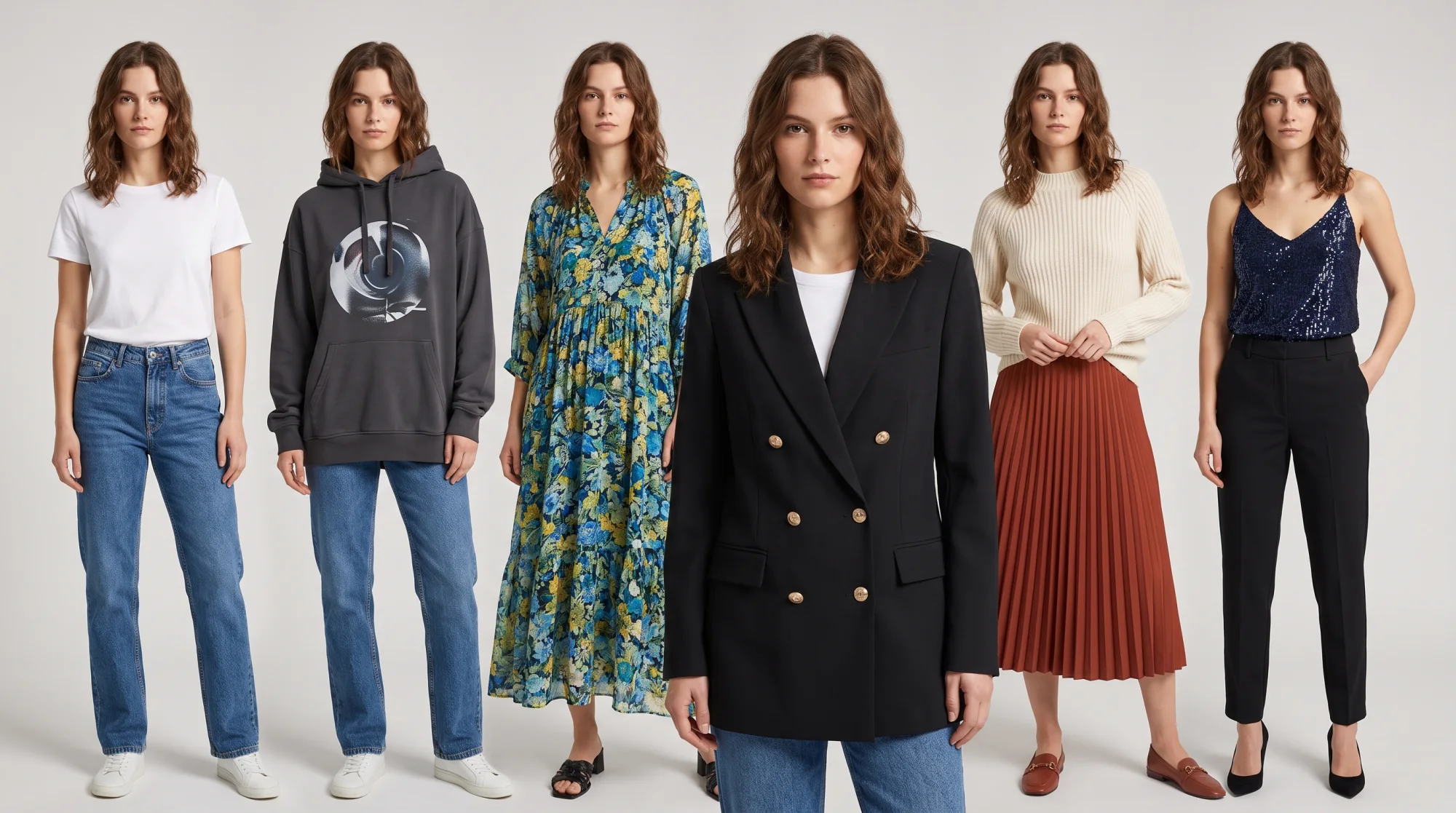
Key takeaways
- 1A lookbook tells the story of a collection, look by look. It sells the mood; a line sheet sells the numbers: SKU, price, colors, sizes and minimum order.
- 2Plan before you shoot: a written concept, a mood board and a shot list for every look (front, back, detail, movement). For a small brand, 6 to 15 looks is a practical range.
- 3The hardest part is consistency: the same model, light and styling on every page. Tryly keeps one model across a whole collection. Check each photo at full size before it goes in.
10 free photos, no card. Photos as low as $0.25 each.
On this page+
What is a fashion lookbook?
The short answer
A fashion lookbook is a set of styled photos that shows a collection as complete outfits, one look at a time, with one model, one mood and one visual story. It shows how the pieces are meant to be worn together, rather than listing each product on its own.
You will also see it written as “look book”. For a small brand, it is often the first thing a shopper, a stockist or an editor sees of a new collection. It does not need a big budget. It needs a plan, a consistent look on every page and photos that show the clothes clearly.
Lookbook vs catalog, line sheet and campaign images
The four are often mixed up. They answer different questions for different people:
| Document | Who it is for | What it shows |
|---|---|---|
| Lookbook | Shoppers, press, stockists | The collection styled into outfits, look by look, with one mood. Sells the idea. |
| Catalog | Shoppers | Every product on its own, usually with prices and product details. Sells the items. |
| Line sheet | Wholesale buyers | Style name and number (SKU), wholesale and retail price, colors, sizes, minimum order (MOQ) and delivery window. Sells the order. |
| Campaign images | Ads, homepage, social | A few hero images built around a story, often with more mood than product detail. Sells the brand. |
A wholesale buyer usually wants the lookbook and the line sheet together: one to see the collection, the other to place the order.
What is a lookbook for?
The short answer
Five jobs: launching a drop, pitching wholesale buyers and stockists, sending to press, filling your store’s collection page, and feeding social media. One good shoot can cover all five.
- Drop launch. Tease a few looks before the drop, then publish the full lookbook on launch day.
- Wholesale and stockists. Buyers see how the range works together before they read the line sheet.
- Press and stylists. Editors pick pieces by look number, so credits and contact details matter.
- Your store’s collection page. Lookbook images set the mood above the product grid.
- Social media. One look per post or per carousel slide gives you weeks of content from one shoot.
If this is your first collection, the lookbook sits alongside the other launch work covered in how to start a clothing brand.
How many looks should a lookbook have?
The short answer
There is no fixed number. As practical guidance, a small drop or capsule works well at 6 to 10 looks, and a full seasonal collection at 10 to 15. Show every piece at least once, and stop before looks start to repeat.
A look is one complete outfit. Five tops, three bottoms and two jackets can make eight strong looks without repeating the same pairing. Put your hero pieces in two looks each, styled differently, so buyers see their range.
How do you make a lookbook, step by step?
The short answer
Plan first, shoot second. Write the concept, build a mood board, number the looks, write a shot list for each one, then lock one model, one location and one set of styling rules before the shoot day.
Most weak lookbooks fail at the planning stage, not at the camera. As one seller on r/streetwearstartup put it: “I suggest to always have a concept/treatment written before contacting a photographer for a lookbook”.
- Write the concept. One paragraph on who wears the collection, where, in what season and with what feeling.
- Build a mood board. 10 to 20 references for light, location, poses, hair, makeup and color.
- Plan and number the looks. Build the outfits and number them Look 01, Look 02 and so on. Show every piece at least once.
- Write a shot list for each look. Front, back, detail and movement for every look, so nothing is missed on the day.
- Cast one model. One person, or one small cast, for the whole lookbook.
- Choose the location and light. One location, or two at most, at the same time of day.
- Lock styling, hair and makeup. Decide shoes, accessories, hair and makeup once, and match every look to the first.
The shot list for every look
Four shots per look cover what a buyer, an editor and a shopper want to see:
| Shot | Why it matters | How to take it |
|---|---|---|
| Full-length front | The main image on the look page, head to shoes. | Straight on, camera at chest height, the same distance for every look. |
| Back | Back prints, cut, pockets and how the garment falls. | Same spot and light. The model turns around. |
| Detail | Fabric, trims, logos, hardware and stitching. | Close up, in focus, one per piece that deserves it. |
| Movement | Drape and swing that a still pose hides. | A few steps toward the camera, or a slow turn. Shoot a burst and pick one. |
How do you shoot a lookbook on a small budget?
The short answer
Shoot at home or in one free location, ask a friend or family member to model, use window light and put your phone on a tripod. What makes it look professional is consistency, not equipment.
A lookbook photoshoot at home: the checklist
- A plain backdrop. A white or light wall, a doorway or a stairwell.
- Window light. The model faces the window, out of direct sun, room lights off. Shoot every look within the same few hours.
- Phone on a tripod. Chest height, the same distance for every look, marked with tape.
- A friend or family member as the model. Book them for the whole shoot.
- The full shot list before each change. Front, back, detail and movement, then the next outfit.
- A check on a bigger screen. Check each look on a laptop before the model changes. A blurry detail is easy to redo now, not later.
Keep the clothes the subject. Moody lighting and heavy edits can make a lookbook look like an album cover, with the garments lost in shadow. More ideas for getting brand-level photos without a big budget are in small fashion brand, big budget photos.
How should a lookbook be laid out?
The short answer
Cover, a short concept page, then one look per page or spread with a look number, product names and colors, and a final page with credits, contact and stockist details.
- Cover. Brand name, collection name and season, over your strongest look.
- Intro or concept page. Two to four sentences of the story behind the collection, and a mood image if you have one.
- Look pages. One look per page or per spread: the full-length image large, the back or a detail smaller.
- Look numbers. Look 01, Look 02 and so on, so a buyer or editor can say exactly which outfit they mean.
- Product names and colors. The name and color of every piece in the look, plus style numbers in the wholesale version.
- Credits. Photographer, model, styling, hair and makeup, and location.
- Contact and stockists. Email, website, social handle, wholesale contact and where to buy.
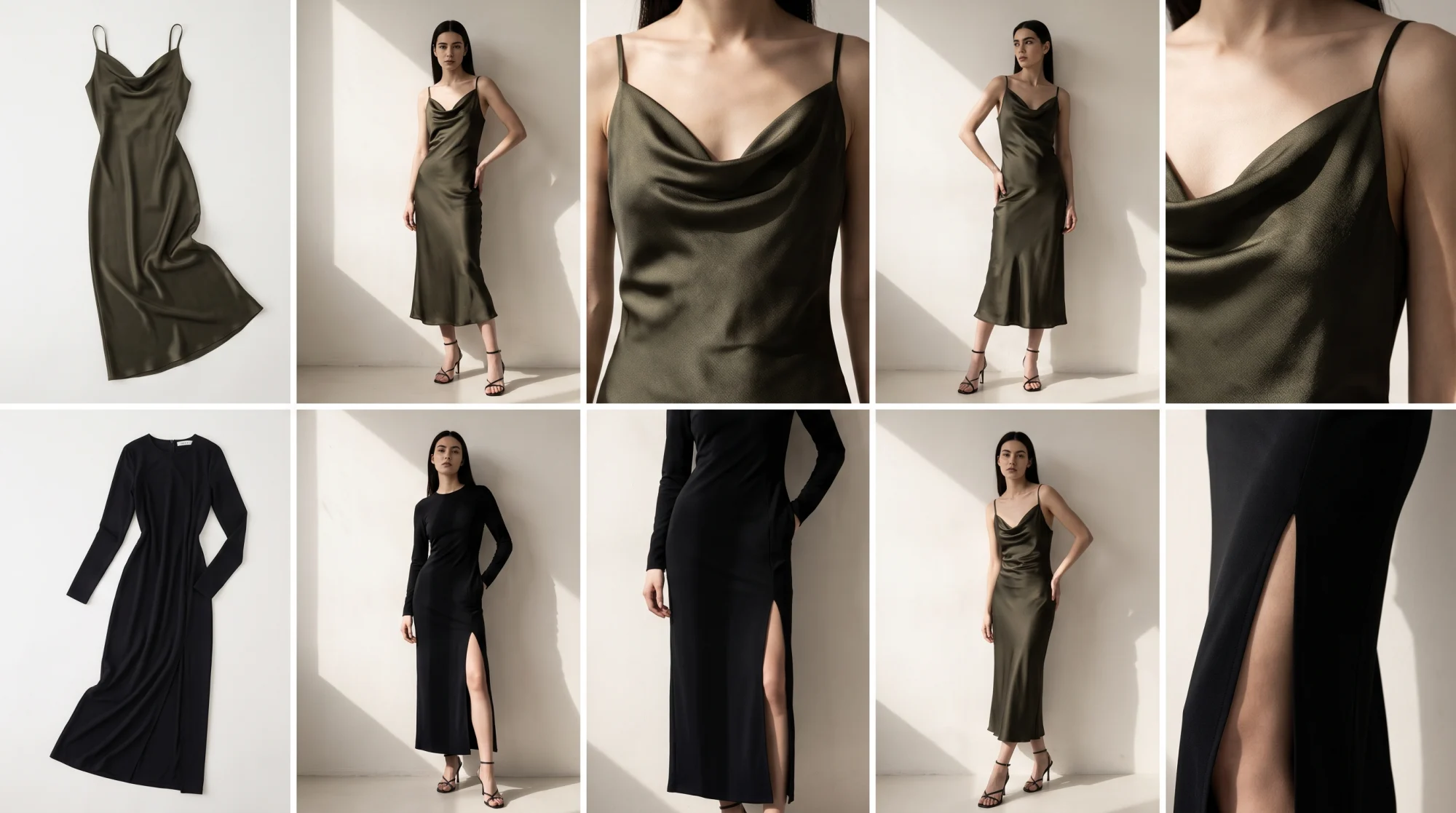
PDF, store page or carousel: which lookbook format?
The short answer
All three, from the same photos. A PDF goes to wholesale buyers and press, a lookbook page or collection lives on your store, and a carousel carries the looks on social media.
PDF for buyers and press
Export the layout as a PDF and send it with your line sheet. Compress the images so it opens quickly on a phone, and put your contact details on the last page.
A lookbook page on your store
Many sellers want exactly what one asked on r/shopify: “How can I create a lookbook page of non clickable photos?” On Shopify, that can be a plain page: Shopify’s help center says you create one under Online Store > Pages, and can insert images, videos, links and tables into it. For the shoppable side, Shopify collections group products by category, theme or customer intent, including seasonal products. Many brands link the lookbook page to the collection.
A carousel for social media
One look per slide, the cover look first, and the look number and product names in the caption. Crop every slide the same way so the carousel reads as one collection.
Fashion lookbook examples: five structures that work
The short answer
Most good lookbooks follow one of five structures: a seasonal story, a drop lookbook, a capsule grid, a wholesale lookbook, or one collection on two casts. Pick the one that fits the job.
1. The seasonal story: a fall or spring look book
Cover, concept page, then 10 to 15 looks in an order that tells the season. A fall look book often opens with outerwear and moves through layers, with close-ups of knits, wool and leather. A spring look book leans on lighter fabrics, color, daylight and movement.
2. The drop lookbook
Common in streetwear: 6 to 10 looks, one location, a strong cover and plenty of movement. It ends with where and when to buy.
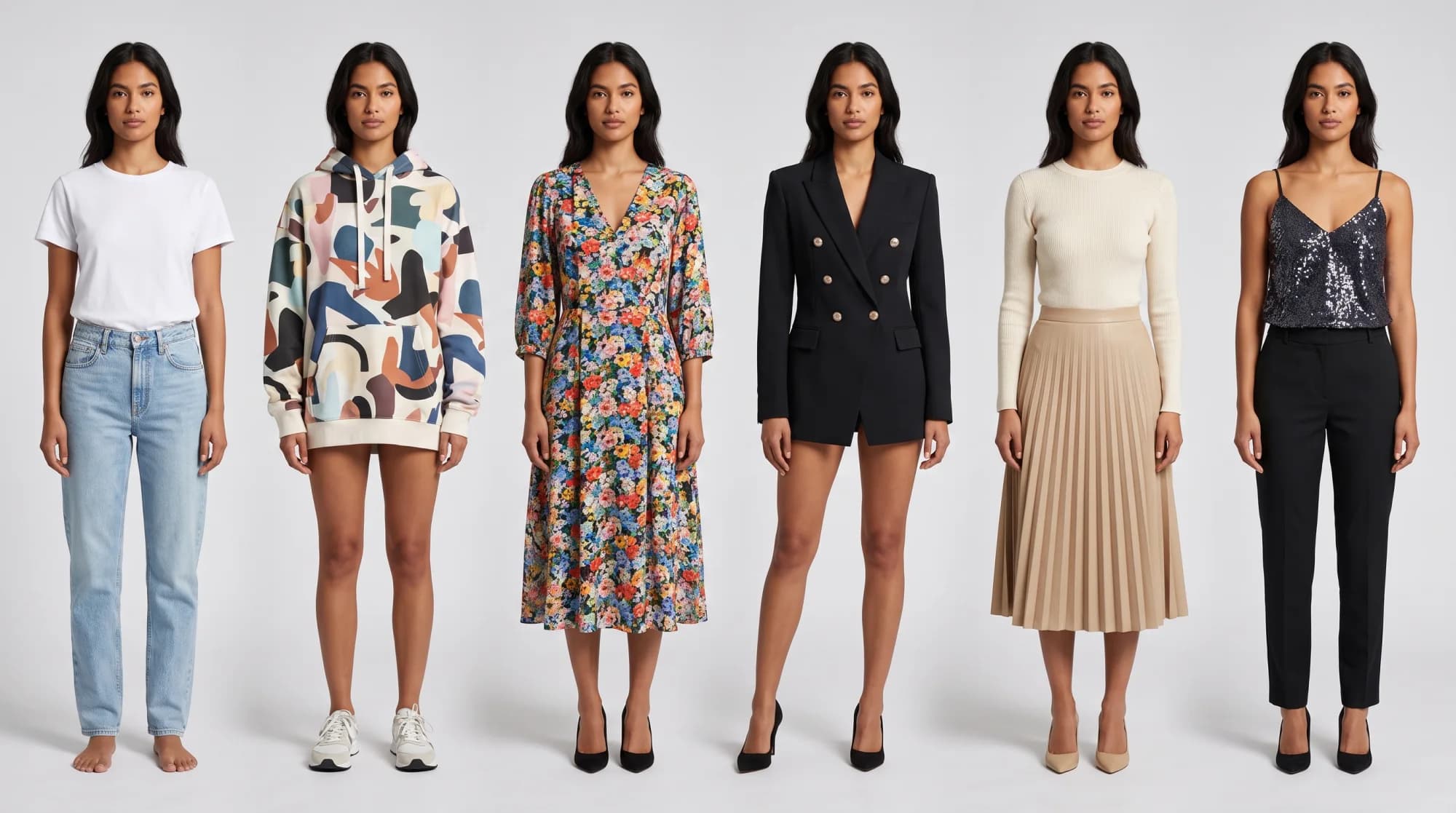
3. The capsule grid
Every look on the same plain background, same framing, same pose family. It reads like a line-up and lets the clothes do the talking.
4. The wholesale lookbook
Numbered look pages with product names, colors and style numbers, then the line sheet at the back and a wholesale contact on the last page. Clarity beats mood here.
5. The men’s look book, or one collection on two casts
The same structures work for a men’s look book. Fit, layering and detail carry more of the story, so give tailoring, outerwear and hardware their own close-ups. A unisex collection can run twice, on two models.
Why is consistency the hardest part of a lookbook?
The short answer
Because a lookbook only works if every page looks like the same collection: the same model, light and styling. That is easy on one hired shoot day, and hard when samples arrive in batches, friends are not free twice and window light changes by the hour.
Swap the model halfway, or shoot half the looks on a cloudy day, and the lookbook reads as two collections.
So here is a whole set side by side, not one photo: three looks from one ten-garment collection shoot.
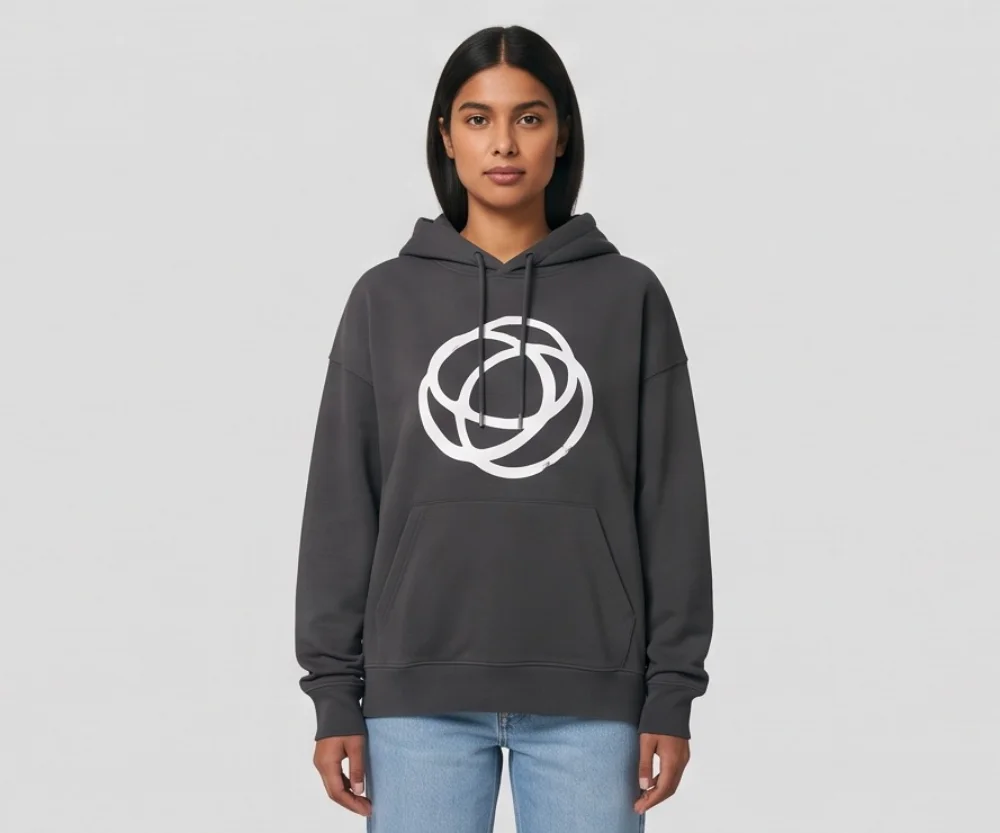
01 Hoodie and jeans
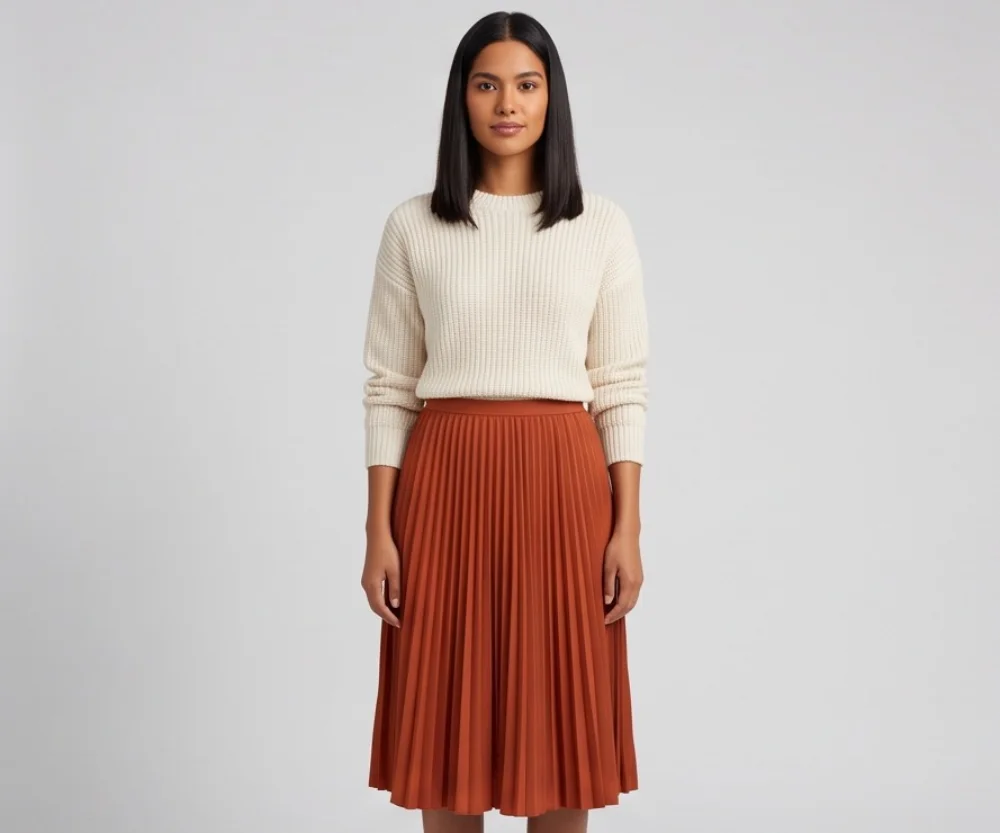
02 Knit and pleats
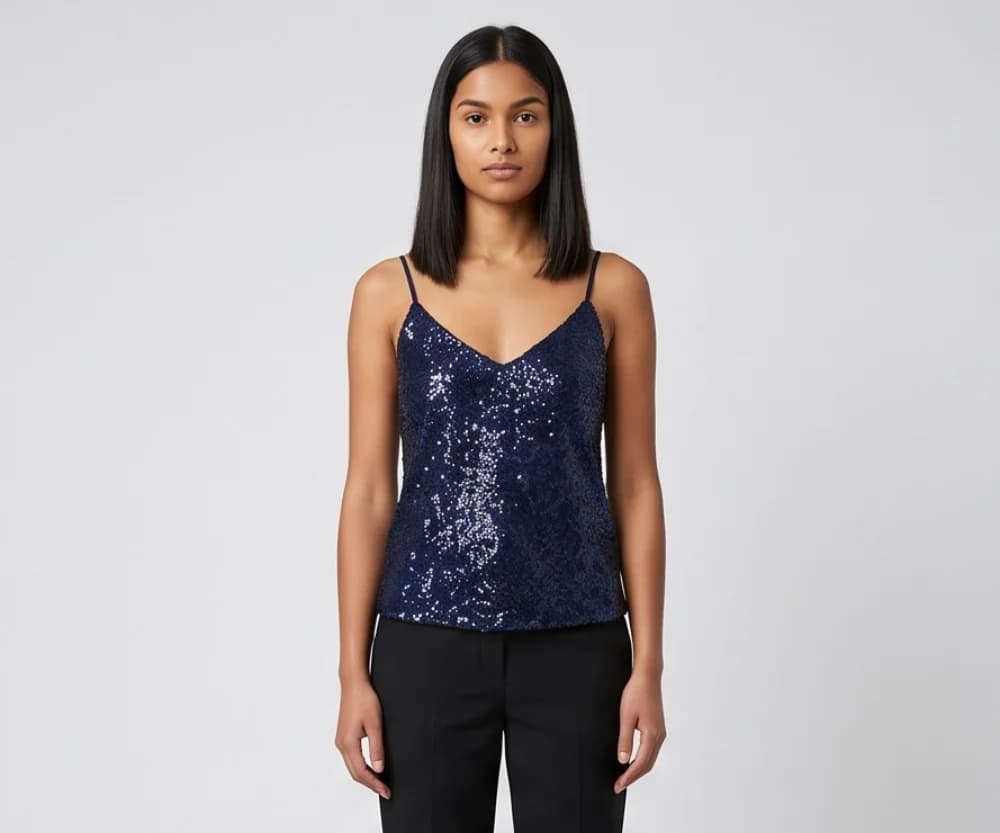
03 Sequin cami
The full collection, all ten garments shown flat, on the model and in close-up, is on the collection demo.
How do you make a lookbook-style collection shoot with Tryly?
The short answer
Photograph each piece flat, on a hanger or on a ghost mannequin, upload it, pick one model, choose poses and a background, and generate. Repeat for each garment with the same model, then check every photo at full size before it goes in the lookbook.
Tryly’s AI fashion photoshoot tool puts the garment on the model in 15 seconds. For a lookbook, the steps are:
- Photograph each piece. Flat, on a hanger or on a ghost mannequin, on a plain background with the whole piece in frame. A phone photo in daylight is enough; here is how to shoot a flat lay.
- Upload it and say what it is: Full Outfit, Top Only or Bottom Only. One garment per shoot.
- Pick one model. Choose from 500+ AI clothing models, switching between women and men and filtering by hair color, age, ethnicity, size and style. Or use your own model, or yourself.
- Choose poses and a background. Front, back and side poses, and a studio or editorial background, or one of your own. Keep the same background for every look.
- Review and generate. The review step shows every choice before anything is spent. One photo is one credit.
- Repeat with the same model. On a paid plan, a “Same model” button brings back the model from your last shoot in a click.
The same garment photos can go on a second model for a different audience, with no new photoshoot: useful for a men’s and a women’s version, or two casts in one lookbook. For the line sheet, Tryly also makes ghost mannequin photos. Photos made on a paid plan can be used on your store, in ads and on social media. If you launch in drops, see how to launch fashion collections faster.
The test that matters
Try it on your hardest garment first.
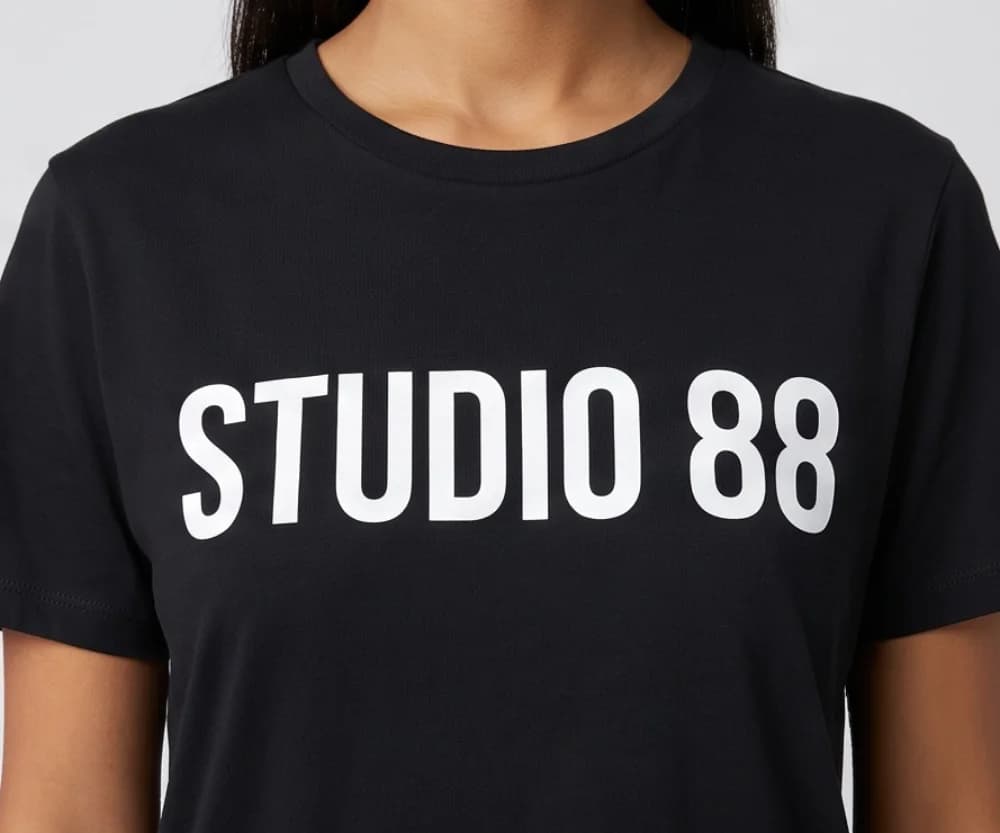
Sellers judge an AI photo tool on the piece most likely to go wrong: a print, a logo, sheer fabric or a detail that has to sit exactly right. Check the result at full size before you publish it. Here: a black tee with a printed slogan.
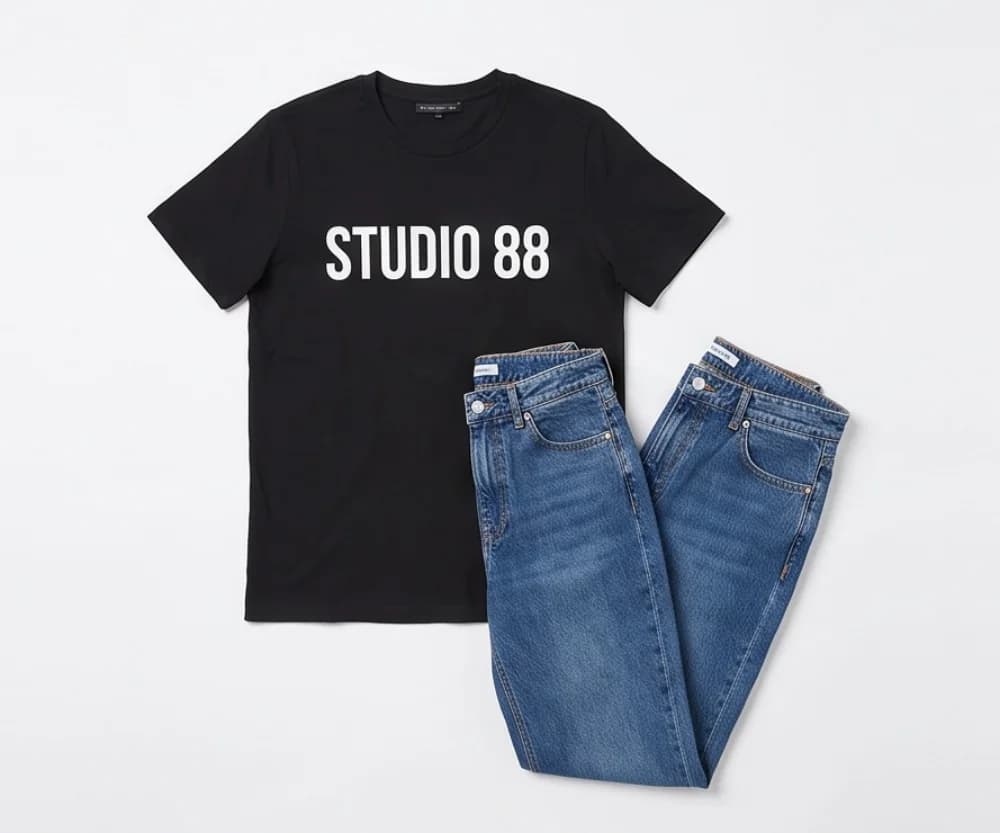
01 Product photo
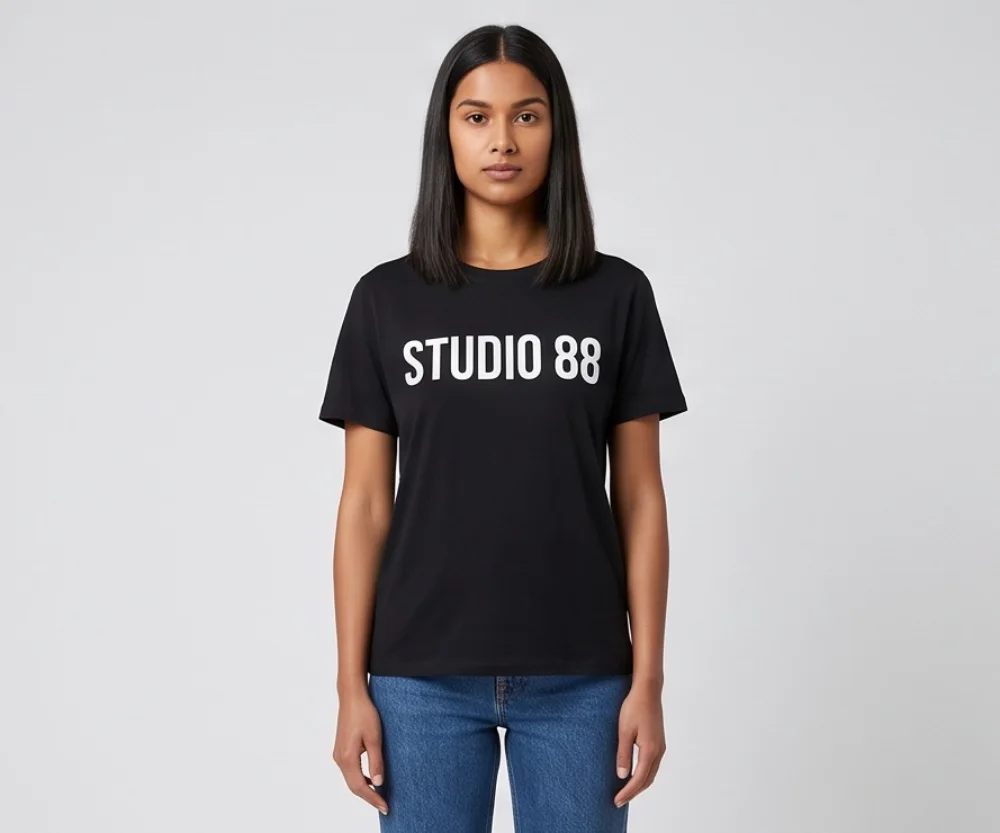
02 On the model
03 Full-size check
10 free photos, no card.
What does a lookbook shoot cost?
The short answer
A hired lookbook day runs from hundreds to thousands of dollars. At Tryly’s lowest rate of $0.25 per photo, 12 looks with three shots each, 36 photos, costs $9.
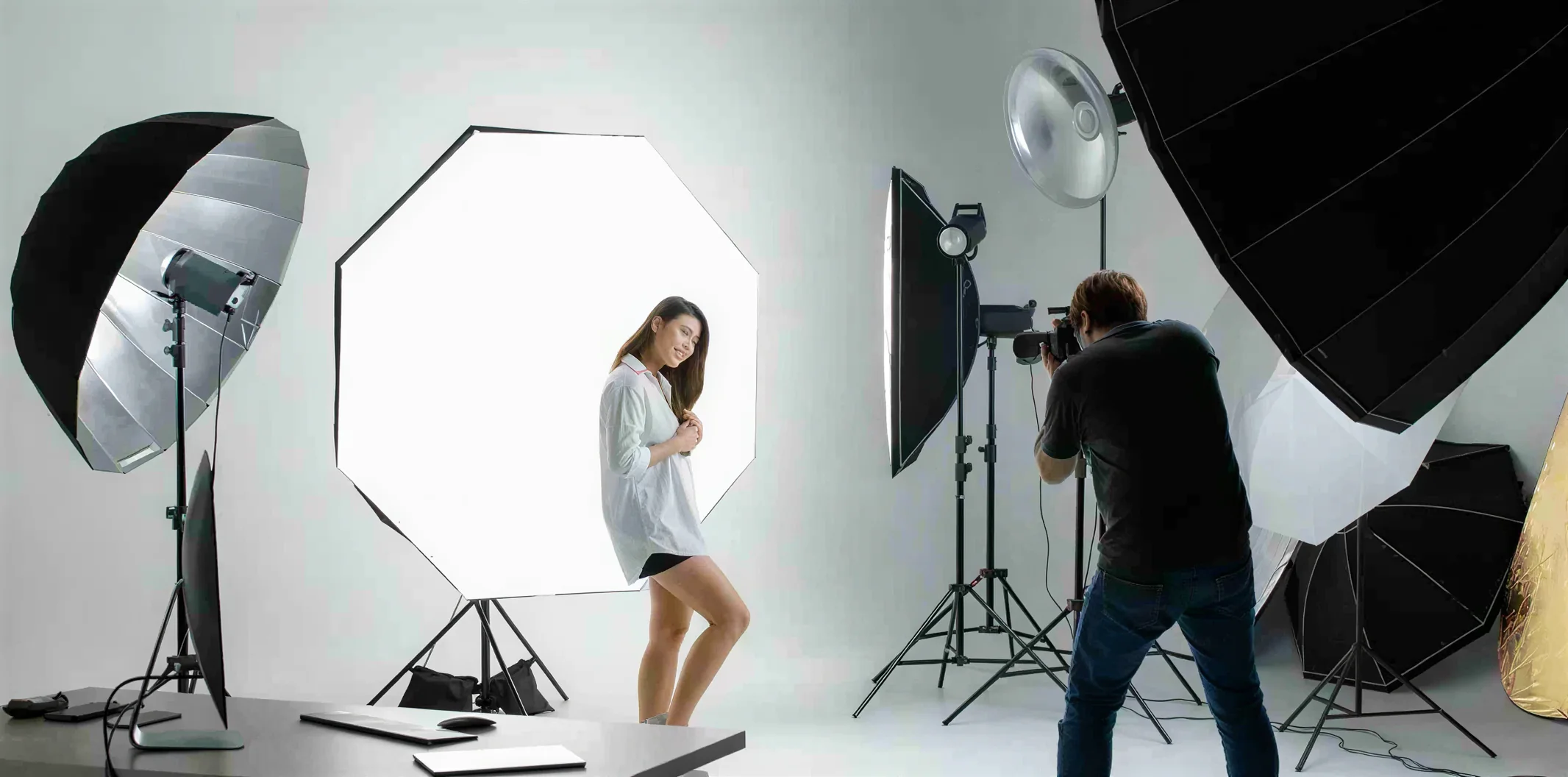
Product photographers charge $500 to $3,000 per day, according to Shopify’s product photography pricing guide. Add a model and a studio, and one eight-hour day comes to roughly $1,180 to $6,400, or $2,230 to $9,900 with a stylist, hair and makeup and basic retouching, as worked out in the true cost of fashion photoshoots.
| Route | Cash cost | What to watch |
|---|---|---|
| At home, with a friend | Little beyond your time | Keeping the model, light and framing the same across every look. |
| Hired crew day | $1,180 to $6,400, or $2,230 to $9,900 with extras | Every piece must be ready on the day. A missed garment means booking again. |
| Tryly | 36 photos = $9 at Tryly’s lowest rate | Check every photo at full size before it goes in the lookbook. |
Plans start from $9.99/month (Starter plan, billed annually), which is from $0.33 a day, and you can test your own pieces first with 10 free photos, no card.
Questions small brands ask about lookbooks
What is the difference between a lookbook and a catalog?+
A lookbook shows the collection styled into complete outfits, look by look, to sell the mood. A catalog shows every product on its own, usually with prices, so shoppers can compare and buy.
How many pages should a lookbook have?+
One page or spread per look, plus a cover, an intro page and a credits and contact page. Twelve looks on one page each comes to about 15 pages.
Can I make a lookbook without a photographer?+
Yes. A phone on a tripod, window light, a plain wall and a friend as the model are enough, if the model, light and framing stay the same for every look. Or make lookbook-style photos from flat photos with Tryly, on one model across the collection. 10 free photos, no card.
What should a lookbook include for wholesale buyers?+
Numbered looks with product names and colors, style numbers, your contact details, and a line sheet alongside it with the SKU, wholesale and retail price, colors, sizes, minimum order and delivery window for every style.
What makes a good fall or spring look book?+
A clear seasonal story. Fall leans on layering, outerwear and texture close-ups; spring on lighter fabrics, color, daylight and movement. In both, keep one model and one light across every look.
How much does it cost to make a lookbook?+
A hired day with a photographer, a model and a studio costs roughly $1,180 to $6,400 at public rates, before styling and retouching. With Tryly, 12 looks with three photos each is 36 photos: $9 at Tryly’s lowest rate of $0.25 per photo.
Sources: photographer day rates from Shopify’s product photography pricing guide; crew-day totals from the true cost of fashion photoshoots; store pages and collections from the Shopify Help Center, creating and editing pages and collections.
Written by
Elena Varga
Head of Content, Tryly Academy
Former e-commerce photo producer who ran catalogue shoots for fashion labels for over a decade. Writes the Academy’s guides.
- 11 years in fashion e-commerce
- 1,200+ catalogue shoots produced
Expert review
Sofia Moretti
Fashion photographer · Expert reviewer
Has shot campaigns and on-model e-commerce for fashion brands for 14 years. Reviews every Academy article for accuracy.
- 14 years in fashion photography
- Campaign and catalogue work across Europe
How we work: every Academy article is written by a specialist, reviewed by a working fashion photographer, and re-checked against its sources when prices or rules change.