Guide
How much does product photography cost? Per-image, per-product and day-rate pricing explained
A plain guide to product photography pricing for small sellers getting quotes: what photographers charge per image, per product, per hour and per day, what pushes a quote up, and one 80-photo catalog costed under every option.

 By Elena Varga
 · Reviewed by Sofia Moretti |Fact-checked|12 min read
Key takeaways
- 1Public guides put per-image rates at $50 to $350 and photographer day rates at $500 to $3,000. The spread is wide because a model, retouching, studio time, usage rights and turnaround are each priced on top.
- 2For 20 products with four photos each, hired product photography runs from about $1,200 product-only to several thousand dollars for a studio day with a model. At Tryly’s lowest rate, the same 80 photos cost $20.
- 3Get comparable quotes with one brief: SKU count, angles, model or not, background, file specs, usage and deadline. Then divide every total by the number of finished photos.
10 free photos, no card. Photos as low as $0.25 each.
On this page+
How much does product photography cost?
The short answer
Product photography cost depends on the pricing model: photographers charge per image, per product, per hour or per day. Public guides put per-image rates at $50 to $350 and day rates at $500 to $3,000, with product-only shots as low as $15 to $75 each. A studio day with a photographer, a hired model and a rented studio comes to roughly $1,180 to $6,400 before retouching. Doing it yourself costs your time. AI on-model photos on Tryly cost as low as $0.25 per photo.
That spread is why two quotes for what looks like the same job can differ by ten times. The number to compare is not the day rate or the hourly rate but the cost per usable photo, once every product, every angle, the editing and the rights to use the pictures are counted. This guide explains each pricing model, what pushes a quote up, and works one catalog through every option.
The ranges come from Shopify’s product photography pricing guide, Squareshot’s clothing photoshoot cost guide, Peerspace’s studio rental guide and soona’s model cost guide; local quotes land inside them or outside on either end. For a full fashion shoot with a crew, the day budget is in the true cost of fashion photoshoots. This article is about how photographers charge, and how to read a quote.
Which pricing models do product photographers use?
The short answer
Four models cover most quotes: per image (a set price per finished photo), per product or package (a price per SKU, usually the most expensive), per hour or per day (you buy time, and the photo count depends on how the day goes), and per photo on an AI tool (a monthly plan or credits, where on Tryly one photo is one credit).
| Pricing model | How it works | Public range | Suits |
|---|---|---|---|
| Per image | A set price for each finished, edited photo. You know the total before the shoot. | $50 to $350 per image (Shopify); product-only shots $15 to $75 (Squareshot) | Small catalogs with a fixed shot list |
| Per product or package | One price per SKU for an agreed set of angles, or a fixed number of images with a price per extra image. | One studio service lists 5 images for $975, 10 for $1,450 and $95 per extra image (Squareshot) | Hero products and campaign images |
| Per hour | You buy the photographer’s time. The photo count depends on how fast the session goes; editing may be extra. | $50 to $500 per hour (Squareshot) | A few products, half-day jobs |
| Per day | A day rate for the photographer. Studio, model, styling and retouching are usually separate lines. | $500 to $3,000 per day (Shopify); $1,000 to $5,000 for clothing brands (Squareshot) | Larger catalogs, on-model shoots |
| Per photo, AI | You upload your own product photo and each generated photo is one credit, on a monthly plan. | As low as $0.25 per photo on Tryly | Catalogs that need on-model photos at scale |
Per image: the easiest to compare
Shopify’s guide describes the per-photo model as a set price for each finished image, and calls it especially helpful for a business that is just starting out. Ask what “finished” includes: basic color correction and cropping, or advanced retouching.
Per product and packages: watch for project creep
A per-product or package rate buys an outcome rather than time. Shopify says it tends to be more expensive than the other models and names project creep as the risk. Studio packages, a fixed number of images at a fixed price with a set fee per extra image, are the easiest to compare per photo.
Per hour and per day: you are buying time, not photos
A day rate looks simple, but the photo count depends on how many products the photographer gets through, and the studio, the model and the retouching are usually separate lines: studios rent for $30 to $150 per hour on Peerspace, and freelance models charge $55 to $275 per hour on soona’s model cost guide. Before you book a day, ask how many products and angles it is expected to cover.
Subscription and per-photo AI
AI photo tools charge a monthly plan or a bundle of credits. Ask two things: how many credits one photo costs, and what the plan price divided by the number of photos comes to. On Tryly one photo is one credit, plans start from $9.99/month (Starter plan, billed annually), and photos cost as low as $0.25 each. The AI section below shows what that buys.
What drives product photography pricing?
The short answer
Eight things move a product photography quote: how many products, how many angles per product, whether a model is in the shot, how much retouching, who else is on set, where it is shot, how you will use the photos, and how fast you need them.
Shopify’s guide lists experience, shot type, equipment, location, crew, editing depth and turnaround as its pricing factors. Here is what each one does to your quote:
Number of SKUs
Per-image and per-product prices scale with every product and color variant. A day rate stretches until the day runs out, then a second day starts.
Angles per product
Marketplaces expect several views. Four angles per product doubles the bill of two, under every pricing model.
On-model or product-only
Product-only shots are the cheapest commercial photography, $15 to $75 per shot on Squareshot’s guide. A model adds the model’s rate, styling and slower changeovers.
Retouching
Basic color correction runs $5 to $20 per image; extensive retouching of skin, fabric and background $50 to $150 (Squareshot). Ask whether it is in the per-image price.
Model, stylist, hair and makeup
Freelance models charge $55 to $275 per hour, agency models $110 to $150 plus about a 20% agency fee (soona). Hair and makeup adds $150 to $800 per day (Squareshot).
Studio rental and location
Studios rent for $30 to $150 per hour on Peerspace, and $75 to $500 per hour in Squareshot’s guide. Travel to your premises adds time and mileage.
Usage rights
Shopify’s guide notes that some commercial rates are driven by usage rather than time, with licensing fees to match. A photo licensed for your product page may not cover ads.
Turnaround
Rush fees run from 25% to 200% of the total job cost (Shopify). Book early and the same photos cost less.
Two of these are your decisions: the number of angles and whether a model is in the shot. Fix them first, and the quotes you get back become comparable.
Worked example: 20 products, 4 photos each, 80 photos
The short answer
For 20 products with four photos each, 80 photos: per-image product shots come to $1,200 to $6,000; Shopify’s general per-image range gives $4,000 to $28,000; a studio day is roughly $740 to $4,200 product-only or $1,180 to $6,400 with a model, before retouching; doing it yourself costs your time; and at Tryly’s lowest rate, 80 photos cost $20.
A 20-product catalog with front, back, side and detail shots is a common first order. Here it is under every pricing model, using only the public ranges above:
| Option | What is in the price | 80 photos | Per photo |
|---|---|---|---|
| Per image, product-only | 80 finished product shots at $15 to $75 each | $1,200 to $6,000 | $15 to $75 |
| Per image, general range | 80 finished photos at $50 to $350 each; on-model sits at the top | $4,000 to $28,000 | $50 to $350 |
| Studio day, product-only | Photographer $500 to $3,000, plus 8 hours of studio at $30 to $150 | $740 to $4,200 | $9 to $53 |
| Studio day, on-model | The same day plus 8 hours of a freelance model at $55 to $275 | $1,180 to $6,400 | $15 to $80 |
| Basic retouching, added | 80 images at $5 to $20 each, if not included | +$400 to $1,600 | +$5 to $20 |
| Do it yourself | Your phone, a window, a white sweep, and your time | Little cash, a day or more of work | Your time |
| Tryly, lowest rate | Your product photo on a model of your choice, one credit per photo | $20 | $0.25 |
A day rate and a per-image rate cannot be compared until both are divided by the number of usable photos. The general per-image range looks alarming at 80 photos because it includes on-model and heavily retouched work; the product-only row is closer to what a white-background catalog costs. Either way, the studio day only beats per-image pricing when the day is full.
Which hidden costs does a photography quote leave out?
The short answer
The quote covers the shoot. It usually leaves out reshoots, shipping samples to the studio, editing beyond basic correction, licence limits on where you can use the photos, and your own time.
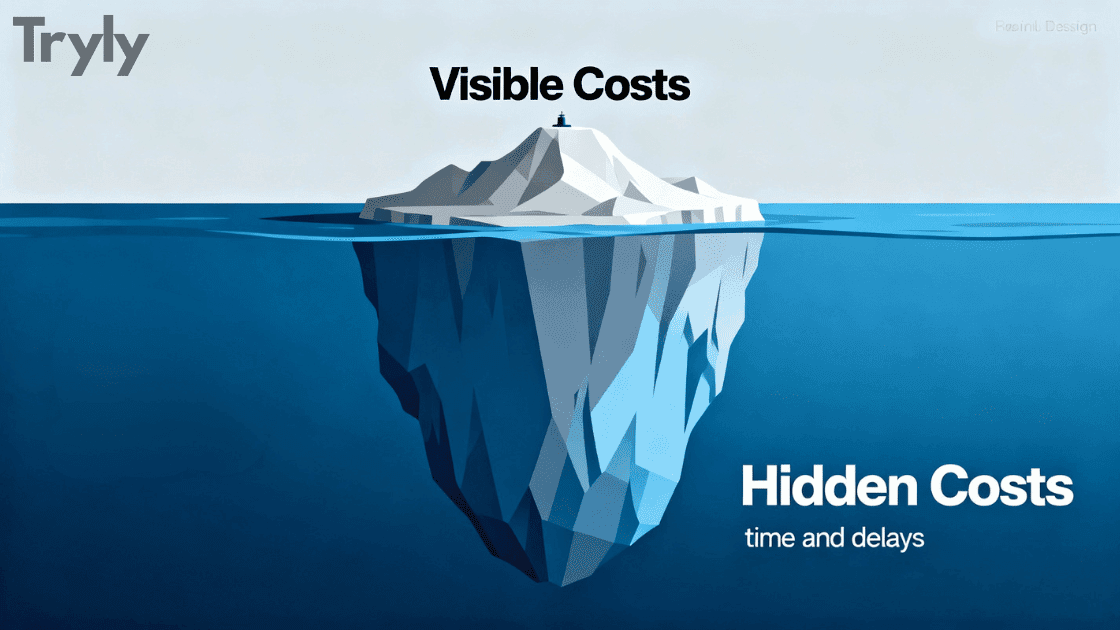
- Reshoots. A missed product, a wrong color or a print that did not come out means a second booking at the same rates, with rush fees of 25% to 200% if it is urgent (Shopify).
- Shipping samples. Products go to the studio and back, insured, and cannot be sold while they are away.
- Editing scope. “Editing included” may mean basic correction only; extensive retouching is $50 to $150 per image (Squareshot).
- Licence limits. Usage is a pricing factor of its own (Shopify). Photos licensed for the web may need a new fee for ads, marketplaces or print.
- Your time. Briefing, prepping products, being on set, selecting and review rounds. None of it is on the invoice.
- Cancellation and change fees. Ask what happens if a product is late, the weather turns, or you add three SKUs the day before.
The costliest is the reshoot, a second booking at the same rates. Fewer reshoots start with a better brief.
How do you get a fair product photography quote?
The short answer
Send every photographer the same brief: SKU count, angles per product, product-only or on-model, background, file specs, usage and deadline. Then ask for the all-in total and divide it by the number of finished photos.
A vague brief gets a padded quote, or a cheap one that grows. Eight lines make quotes comparable:
- Count the SKUs and variants. List every product and every color variant. Each variant is its own set of photos and the first thing a photographer prices.
- Fix the angles per product. Decide the shot list once, for example front, back, side and one detail. Four angles cost twice as much as two.
- Decide product-only or on-model. Say whether a model is in the shot, who books the model, and whether styling, hair and makeup are needed.
- Specify the background. White for marketplaces, a set or location for ads. A white sweep is cheaper and easier to keep consistent.
- Give the file specs. Pixel size, format, crop ratio and naming, so the files meet your marketplace’s requirements without a second edit.
- State the usage. Where the photos will run (store, ads, marketplaces, print) and for how long. Some photographers price licensing separately.
- Set the turnaround and reshoot terms. Agree the delivery date, what counts as a reshoot at the photographer’s cost, and any rush or cancellation fees.
- Ask for the price per finished photo. Request the all-in total and divide it by the number of finished photos. Compare quotes on that number, not the day rate.
For the background line, a white sweep is the safe default for marketplaces; the setup is in the guide to white background product photography. For the usage line, say plainly where the photos will run: store, ads, marketplaces, print.
When is DIY product photography enough, and when should you pay?
The short answer
DIY is enough for product-only shots on a white background: a phone, a window and a white sweep get marketplace-ready photos. Pay when you need a model in the picture, one consistent look across a large catalog, or campaign images.
When DIY is enough
- White-background listing photos. A phone by a window on a white sweep, with a white card to fill the shadows. The setup is in the guide to product photography lighting.
- Detail shots. Labels, stitching, hardware and flaws, which buyers trust more when they look like your own photos.
- Small catalogs that change often. A repeatable home setup beats booking a photographer for a few new items a week, and a flat, hanger or mannequin photo is also the source for an on-model photo later.
When to pay
- A model in the shot. Fit, drape and scale are what an on-model photo shows, and a friend in front of a wall rarely matches a catalog.
- One look across many products. The same model, light and crop on every listing reads as one brand.
- Hard materials and campaigns. Reflective jewelry and watches take lighting skill (the home method is in the guide to jewelry photography), and a location shoot with a stylist is a crew day.
Many sellers land in the middle: they shoot the product themselves and pay only for the on-model photos, which is where the money goes. That is the split the AI option changes.
What does AI on-model product photography cost?
The short answer
On Tryly, you upload your own product photo, pick one of 500+ models, or your own model or yourself, and get on-model photos for one credit each: as low as $0.25 per photo, on plans from $9.99/month (Starter plan, billed annually). The first 10 photos are free, no card.
The product photo is the one you already take at home: flat, on a hanger or on a mannequin. Upload it, say what the garment is, pick a model, choose the poses and the background, then generate and download; an on-model photo takes about 15 seconds. There is no model fee, no studio hour and no sample to ship, which is why the 80-photo catalog above comes to $20 at Tryly’s lowest rate.
 Before
 After
AfterThe same model across the whole catalog
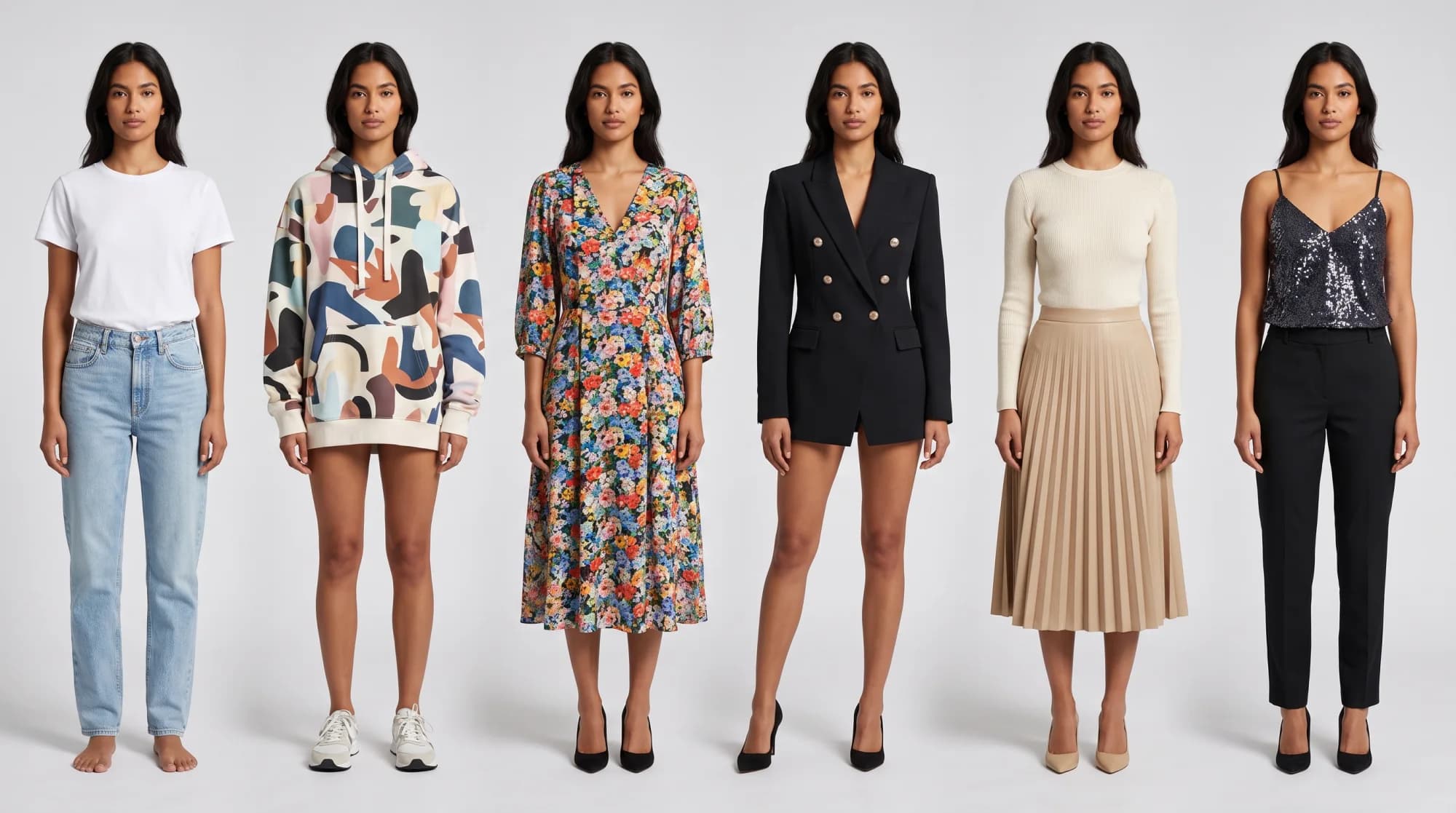
Consistency is the expensive part of hired photography: the same model and studio, booked again for every drop. On Tryly you pick one model and use that same person for every garment, and the same pieces can go on a second model for a different audience. The collection demo shows ten garments on one model, each flat, on the model and in close-up.
Check every photo at full size before you publish
Judge the result the way a buyer will: at full size. Fine print, small logos and dense patterns are the details to inspect first, so run your printed pieces early and compare the close-up with your source photo.
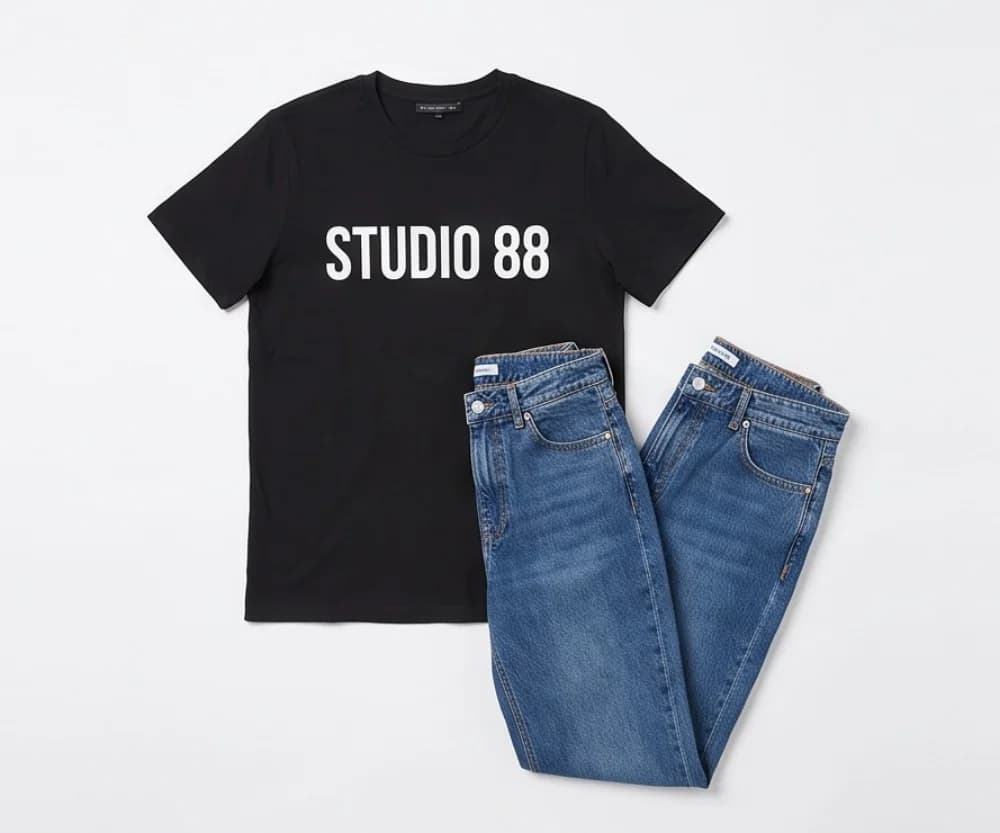
01 Product photo
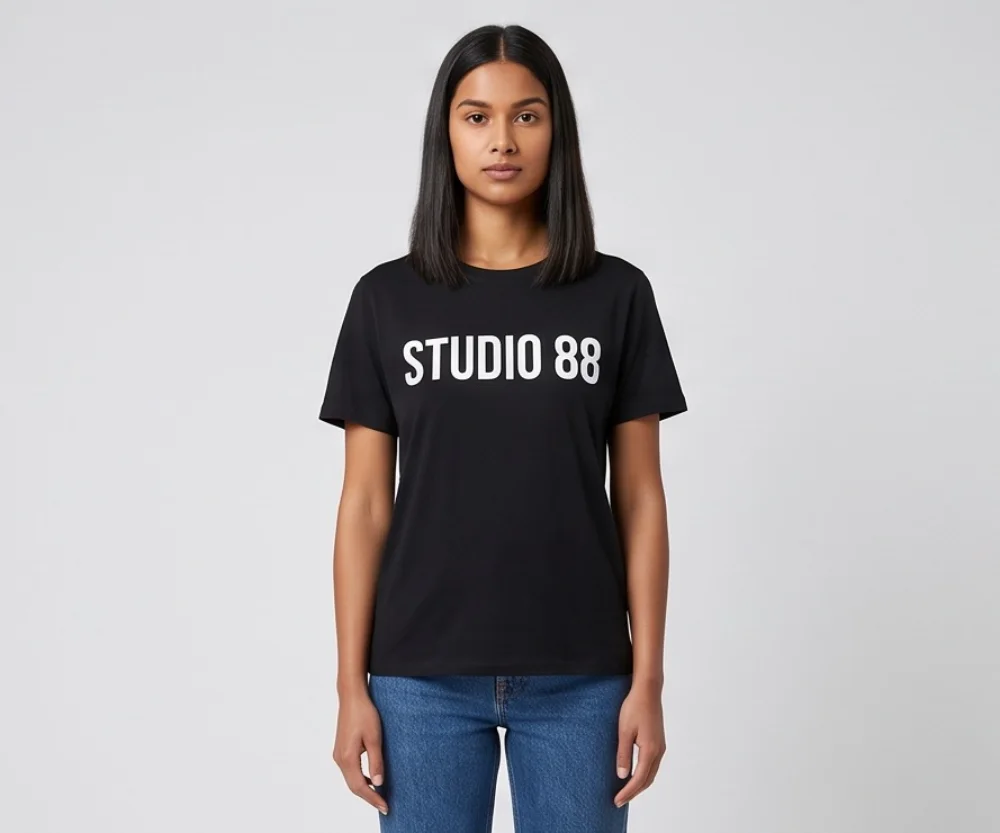
02 On the model
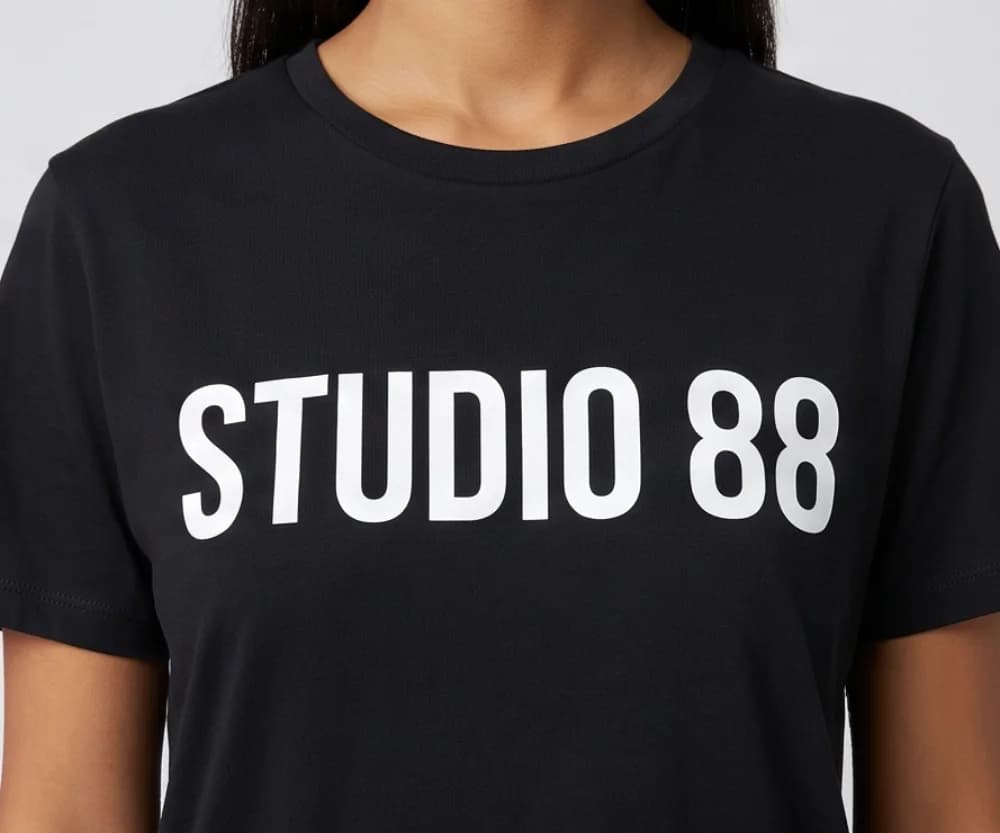
03 Full-size check
Photos made on a paid plan can be used on your store, in ads and on social media; the platform rules are in usage rights and ad policy for AI fashion photos. The same flow covers clothing, shoes, bags, hats, watches and jewelry, and can make a ghost mannequin shot from a flat or hanger photo. Costing a launch? The photo line in starting a clothing brand uses the same numbers.
Questions sellers ask about product photography cost
How much does product photography cost per image?+
Per-image pricing runs $50 to $350 per finished photo in Shopify’s product photography pricing guide; product-only shots run $15 to $75 per shot in Squareshot’s guide. Basic retouching adds $5 to $20 per image if it is not included. On Tryly, on-model photos made from your own product photo cost as low as $0.25 each.
How much does a product photographer charge per hour or per day?+
Photographers charge $50 to $500 per hour, and clothing brands typically pay $1,000 to $5,000 per day, according to Squareshot’s guide; Shopify puts product photographer day rates at $500 to $3,000. Studio rental is extra, at $30 to $150 per hour on Peerspace.
How much does a product photoshoot cost with a model?+
One day of a photographer, a freelance model and a rented studio comes to roughly $1,180 to $6,400 on public rates from Shopify, soona and Peerspace, before styling, hair and makeup or retouching. Freelance models charge $55 to $275 per hour; agency models $110 to $150 per hour plus about a 20% agency fee.
Is product photography cheaper per image or per day?+
Per day is cheaper per photo only if you fill the day. A $500 to $3,000 day that yields 80 photos works out at about $6 to $38 per photo, against $50 to $350 per image; a day that yields 20 photos loses. Ask how many products the photographer expects to shoot in a day.
What is a fair price for product photography for a small business?+
A fair quote is one you can divide by the number of finished photos and compare. For a 20-product catalog with four photos each, hired photography runs from about $1,200 product-only to several thousand dollars for a studio day with a model. A phone and a window cover white-background shots for close to nothing in cash, and Tryly makes on-model photos from your product photo for as low as $0.25 each.
What hidden costs should I budget for in a product photoshoot?+
Reshoots at the same rates, rush fees of 25% to 200% of the job cost (Shopify), shipping samples to the studio and back, retouching beyond basic correction ($50 to $150 per image on Squareshot’s guide), and licence fees if you use the photos somewhere the quote did not cover.
How much does AI product photography cost?+
On Tryly, plans start from $9.99/month (Starter plan, billed annually), which is from $0.33 a day, and photos cost as low as $0.25 each. One photo is one credit. At Tryly’s lowest rate, 80 photos cost $20 and 100 photos cost $25. The first 10 photos are free, with no card.
Sources: per-image rates, day rates, pricing models, licensing and rush fees from Shopify’s product photography pricing guide; hourly and clothing-brand day rates, product-only shots, retouching, hair and makeup, studio and package prices from Squareshot’s clothing photoshoot cost guide; studio rental from Peerspace’s studio rental guide; model rates from soona’s model cost guide. Rates change; check each page before you budget.
Written by
Elena Varga
Head of Content, Tryly Academy
Former e-commerce photo producer who ran catalogue shoots for fashion labels for over a decade. Writes the Academy’s guides.
- 11 years in fashion e-commerce
- 1,200+ catalogue shoots produced
Expert review
Sofia Moretti
Fashion photographer · Expert reviewer
Has shot campaigns and on-model e-commerce for fashion brands for 14 years. Reviews every Academy article for accuracy.
- 14 years in fashion photography
- Campaign and catalogue work across Europe
How we work: every Academy article is written by a specialist, reviewed by a working fashion photographer, and re-checked against its sources when prices or rules change.