Guide
Where to sell clothes online: the best sites and apps compared
Clearing a closet, flipping finds or launching a brand: Poshmark, Depop, Vinted, eBay, Mercari, ThredUp, Facebook Marketplace, Vestiaire Collective, The RealReal, Grailed, Etsy and Shopify, compared on fees, shipping and the photos each one wants, from their own pages.

 By Elena Varga
 · Reviewed by Sofia Moretti |Fact-checked|11 min read
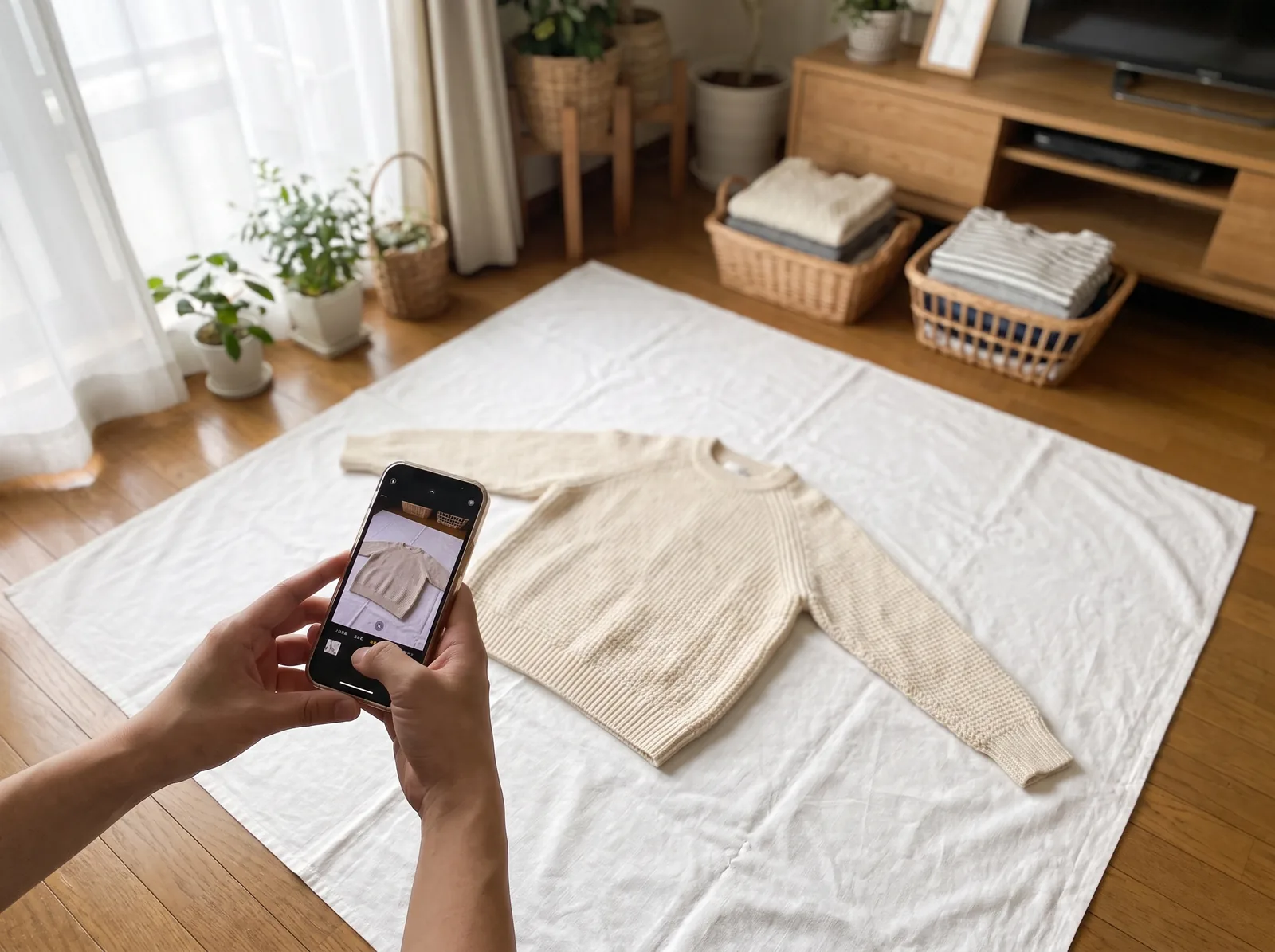
Key takeaways
- 1Match the platform to the item: Vinted and Depop cost the least per sale, Poshmark and eBay bring the biggest audiences, Vestiaire, The RealReal and Grailed take designer pieces, and Etsy and Shopify are for makers and brands.
- 2Fees are a spread, not a rule of thumb: nothing on Vinted, 3.3% + $0.45 on Depop in the US, 10% on Mercari, 13.6% plus a per-order fee on eBay, 20% on Poshmark at $15 and up. Check each fee page before you price.
- 3Buyers on every platform want the same two things: proof (tag, label and flaw close-ups) and fit (a worn photo). A worn photo of the real garment can be made from your flat photo, with the real tag and flaw photos kept beside it.
10 free photos, no card. Photos as low as $0.25 each.
On this page+
Where is the best place to sell clothes online?
The short answer
It depends on what you sell. To sell clothes online from an ordinary closet, use the resale apps: Vinted takes no selling fee, Depop takes none from US sellers, and Poshmark and Mercari take a cut for bigger audiences. eBay suits branded pieces and sneakers, Facebook Marketplace local sales, Vestiaire Collective, The RealReal and Grailed designer pieces and menswear, ThredUp a whole bag with no listing work, Etsy handmade and vintage, and Shopify your own brand.
Every fee, shipping rule and photo rule below comes from the platform’s own help, policy or pricing page, linked so you can check it. Fees change, so check the platform’s fee page before you price.
| Platform | Best for | Fees | Who ships | Photos it wants |
|---|---|---|---|---|
| Poshmark | Brand-name women’s, men’s and kids’ clothes | $2.95 flat under $15; 20% at $15 or more | Buyer pays a flat $6.49; you print the label | Up to 16, sized 1000 × 1000 |
| Depop | Vintage, streetwear, one-off pieces | No selling fee in the US; 3.3% + $0.45 processing | Depop shipping label, or your own | 4 and a video in the app, 8 on the web |
| Vinted | Everyday clothes, fast turnover | None: you receive the full price | Buyer pays; you get a prepaid label | Up to 20, whole item first |
| Mercari | Everyday clothes and accessories | 10% of item price plus buyer-paid shipping | Label emailed to you; ship within 3 business days | Up to 12, every side and every flaw |
| eBay | Branded pieces, vintage, sneakers | 13.6% plus $0.30 or $0.40 per order; 250 free listings a month | You set shipping; the fee counts it | Up to 24, about 1600 × 1600 |
| Facebook Marketplace | Local, no-fee sales and bundles | None shown for local sales; shipped orders: see its help page | Local pickup, or shipping where offered | Your own photos, added when you list |
| ThredUp | A whole bag at once, no listing work | A share of the sale price, by brand and condition | You mail a kit with a prepaid label | None: ThredUp photographs |
| The RealReal | Designer and luxury consignment | By tier and item, plus a 1–5% loyalty bonus on $200+ items | In-home appointments and van pickup, by tier | Consignment: see its guide |
| Vestiaire Collective | Designer and luxury, $18 minimum | 12% on $83–$16,667; $10 flat under $83; plus 3% processing | See its help center | At least 3, ideally 5+; main photo unworn |
| Grailed | Menswear, streetwear, designer, sneakers | 9% at $120+; 6% under $120; plus 3.49% + $0.49 processing | Grailed Label, or your own | Your own photos; brand and wash tags required; no people |
| Etsy | Handmade, vintage and craft supplies | $0.20 per listing; 6.5% of price plus shipping; processing by country | You ship | Up to 20 and 2 videos; 2000 px recommended |
| Shopify | Your own brand, your own store | Monthly plan plus card rates; see its pricing page | You ship | Up to 250 per product; 2048 × 2048 displays best |
Which apps to sell clothes are best for a closet clear-out?
The short answer
Poshmark, Depop, Vinted and Mercari: free to list on and run from your phone. Vinted has no selling fee, Depop charges US sellers only a processing fee, and Poshmark and Mercari take a share of each sale in return for the biggest US audiences.
Selling on Poshmark
Brand-name women’s, men’s and kids’ clothes at everyday prices. Its fee page: a flat $2.95 on sales under $15; 20% on sales of $15 or more, so you keep 80%. Shipping is a flat $6.49 paid by the buyer, by USPS Ground Advantage, per its shipping page; a bundle ships under one fee up to 5 lbs, and the seller pays any overweight. Its listing guide allows 16 photos at 1000 × 1000 pixels, with condition, measurements and fabric in the description, and its seller policy asks for your original photos and no collages or heavy effects.
Selling on Depop
Vintage, streetwear and one-off pieces, sold to a younger crowd that shops by style. Its seller fees page charges no selling fee in the US, UK and Australia; US sellers pay a 3.3% + $0.45 processing fee on the item price plus shipping and tax, taken before the money reaches your bank. Sellers elsewhere pay 10%, and Boosted Listings carry a 12% boosting fee for UK and US sellers. Ship with a Depop shipping label or your own. Its listing guide allows four photos and a video in the app, eight photos on the web, and its stock images policy asks for photos you took yourself.
Selling on Vinted
The cheapest place to sell clothes online. Its help page says there are no fees for uploading or selling, and you receive the full selling price in your Vinted Wallet; buyers pay shipping and you get a prepaid label, per its how it works page. Good for everyday clothes that need to move. Its photo guide allows 20 photos, the whole item first, in daylight, with the care label and every defect shown.
Selling on Mercari
A general marketplace with a big clothing section. Its fees page: listing is free, a 10% selling fee applies to the item price plus buyer-paid shipping, sellers pay no processing fee, buyers pay a 3.6% Buyer Protection fee, direct deposit is free and Instant Pay is $3. After a sale a label is emailed to you and you ship within three business days; the buyer has three days to confirm, you rate them, and the money is released, per its how to sell page. Its listing guide allows 12 photos: natural light, plain background, every side, every flaw, best photo first.
eBay and Facebook Marketplace: the largest audiences
The short answer
eBay reaches buyers who search by brand and model, so it suits branded pieces, vintage and sneakers. Facebook Marketplace reaches people nearby, with no fee shown for local sales, so it suits bundles and anything you would rather hand over than post.
Selling on eBay
Its selling fees page gives every seller 250 zero-insertion-fee listings a month. When an item sells, most categories pay 13.6% of the total sale up to $7,500, where the total includes the item price plus any shipping you charge, plus a per-order fee of $0.30 on orders of $10 or less and $0.40 above. Athletic shoes selling for $150 or more pay 8% and no per-order fee. You set your own shipping. Its photo tips allow 24 photos at about 1600 × 1600 pixels, on a white background, no flash, flaws close up; its picture policy needs at least 500 pixels on the longest side and bans borders, text, watermarks and stock photos for used items.
Selling on Facebook Marketplace
Its help page lists the steps: Marketplace, Create new listing, Item for sale, Add photos, details, Publish; a price of 0 marks an item as Free, and no fee is shown for a local sale. Selling with shipping is offered only in some locations, and the fee and payout for shipped orders are on its Sell with Shipping page. It suits bags of kids’ clothes, coats and anything heavy, sold to someone who collects.
Selling used clothes without listing them yourself: ThredUp and The RealReal
The short answer
ThredUp and The RealReal are consignment: you hand the clothes over, they list and sell them, and you get a share when an item sells. Least work, lowest payout per item: a whole bag of mid-range clothes for ThredUp, designer pieces you would rather not photograph for The RealReal.
ThredUp
Order a Clean Out Kit, fill it and send it back with a prepaid label. In its partner-program FAQ, ThredUp says it handles inspection and photography, lists accepted items for a consignment window, and pays a percentage of the final selling price by brand and condition; only about half the items in an average kit meet its standards, and getting unlisted items back costs a Return Assurance fee. The current payout table is on its Clean Out page. For a clear-out you want gone this week, not for pieces worth listing yourself.
The RealReal
Designer and luxury on consignment. Its earnings guide sets a status tier by your net sales, from under $1,499 to $10,000 and up, with a loyalty bonus of 1%, 2% or 5% on items of $200 and over at the three higher tiers, and perks such as in-home appointments and van pickup, where available, by tier. The commission by item and price band is on that page; read it before you send anything.
Vestiaire Collective and Grailed: designer pieces and menswear
The short answer
Curated marketplaces where you do the photos and shipping and keep more than consignment pays. Vestiaire Collective takes designer pieces at $18 and up; Grailed takes menswear, streetwear and sneakers, and checks listings before they go live.
Vestiaire Collective
Listing is free. Its selling fees page takes 12% of the final price on items priced $83 to $16,667, a fixed $10 under $83 and $2,000 above $16,667, plus a 3% processing fee (minimum $3); it does not accept items under $18. Its photo guide asks for at least three photos, ideally five or more: the main photo the whole item from the front on a neutral background, unworn and not on a mannequin, because it is cropped for the catalog; then daylight, defect close-ups, and the brand tag, composition tag or serial number. JPEG or PNG under 10 MB.
Grailed
Its fee page charges 9% on sales of $120 and above and 6% (minimum $1.99) below; the sale price includes shipping you charge unless you use a Grailed Label. A payment processing fee comes on top: 3.49% + $0.49 on US domestic payments when set up with Stripe, more internationally. Its photo standards are the strictest here: photos must be your own, of the actual item you will ship; a clear brand tag and wash tag are required; wear and flaws must be shown; blurry photos can get a listing rejected; and photos must not include images of individuals, so there is no worn shot on Grailed. Its authenticators may review a listing before it goes live.
Etsy and Shopify: handmade, vintage and your own brand
The short answer
Etsy is for clothes you made, vintage and craft supplies, under its rules and fees. Shopify is your own store: no marketplace rules and no cut beyond card rates, but every visitor is yours to bring. Etsy for a side line of handmade pieces, Shopify when you are starting a clothing brand.
Etsy
Etsy lists handmade, vintage and craft supplies, so last season’s high-street pieces do not belong here. Its fees policy charges $0.20 per listing whether or not it sells, with listings expiring after four months and renewing at $0.20; a 6.5% transaction fee on the price plus shipping and gift wrapping; a processing fee that depends on your bank’s country; a possible one-time set-up fee; and 15% on any order that comes through Offsite Ads, or 12% once your shop passes $10,000 in a year. Its listing guide allows 20 photos and two videos, its image guidelines recommend at least 2000 pixels, and its listing image rules require original photos of the actual item, not renderings.
Shopify: your own store
Nobody browses Shopify, so it suits a brand that brings its own customers through social media, ads and search. Its pricing page shows a monthly plan fee (lower paid yearly), card rates on each sale, a 2% third-party transaction fee on the Basic plan if you do not use Shopify Payments, and a three-day free trial; prices show in your local currency. Its help center allows 250 images, videos or 3D models per product and says 2048 × 2048 pixels displays best. The clothing brand launch plan covers the rest.
How do you pick the best site to sell clothes?
The short answer
Pick by the item first and your time second. Cheap basics go where fees are lowest, brand names where the audience is biggest, designer pieces where buyers expect authentication, and anything you cannot face listing goes to consignment.
| What you are selling | Where to list it |
|---|---|
| Everyday basics under about $15 | Vinted (no fee), Mercari, or Facebook Marketplace locally. Poshmark’s flat $2.95 takes a big bite of a small sale, and Vestiaire will not list under $18. |
| Mid-range brand names, $20–$150 | Poshmark, Depop, Mercari and eBay. List on two and take it down where it does not sell. |
| Vintage, Y2K and streetwear | Depop first, eBay for the searchers, Grailed for menswear. |
| Designer and luxury | Vestiaire Collective or Grailed if you will do the photos and shipping; The RealReal if you would rather hand it over. |
| Sneakers | eBay (8% and no per-order fee on athletic shoes at $150 or more) and Grailed. |
| A whole wardrobe, or kids’ clothes in bulk | ThredUp for the least work; Vinted or Facebook Marketplace for the most money per item. |
| Things you made or curated | Etsy, which lists handmade, vintage and craft supplies. |
| Your own brand | Shopify for your store and customer list, plus one marketplace where your customer already shops. |
Then weigh the effort
- Least work, lowest payout: ThredUp and The RealReal. One bag, one label, someone else answers the messages.
- An evening per batch: the apps and eBay. Photograph everything in one session by the window, list in one sitting, and post within a day or two of each sale.
- An ongoing job: a Shopify store. You keep the margin and the customer list, but photos, traffic and support are yours.
How do you write a clothing listing that sells?
The short answer
A title with brand, item, size and color; measurements taken flat; every flaw named and photographed; and a photo set that shows the whole item, its tags and how it looks on. That answers what buyers otherwise message about: what is it, will it fit, what condition is it in, and how does it look worn.
The title
Brand, item, size, color, one defining detail: “Levi’s 501 jeans, W32 L32, mid blue, made in USA.” Buyers on eBay, Poshmark and Grailed search by brand and model, so put them first. Skip “stunning” and keep the price out of the title.
Measurements
Sizes vary by brand and by decade, so measure flat with a soft tape: pit to pit, length, and for trousers waist, rise and inseam. Put them in the description on every platform, and in a photo with the tape across the item. Missing measurements are the commonest reason a buyer asks instead of buying.
Flaws
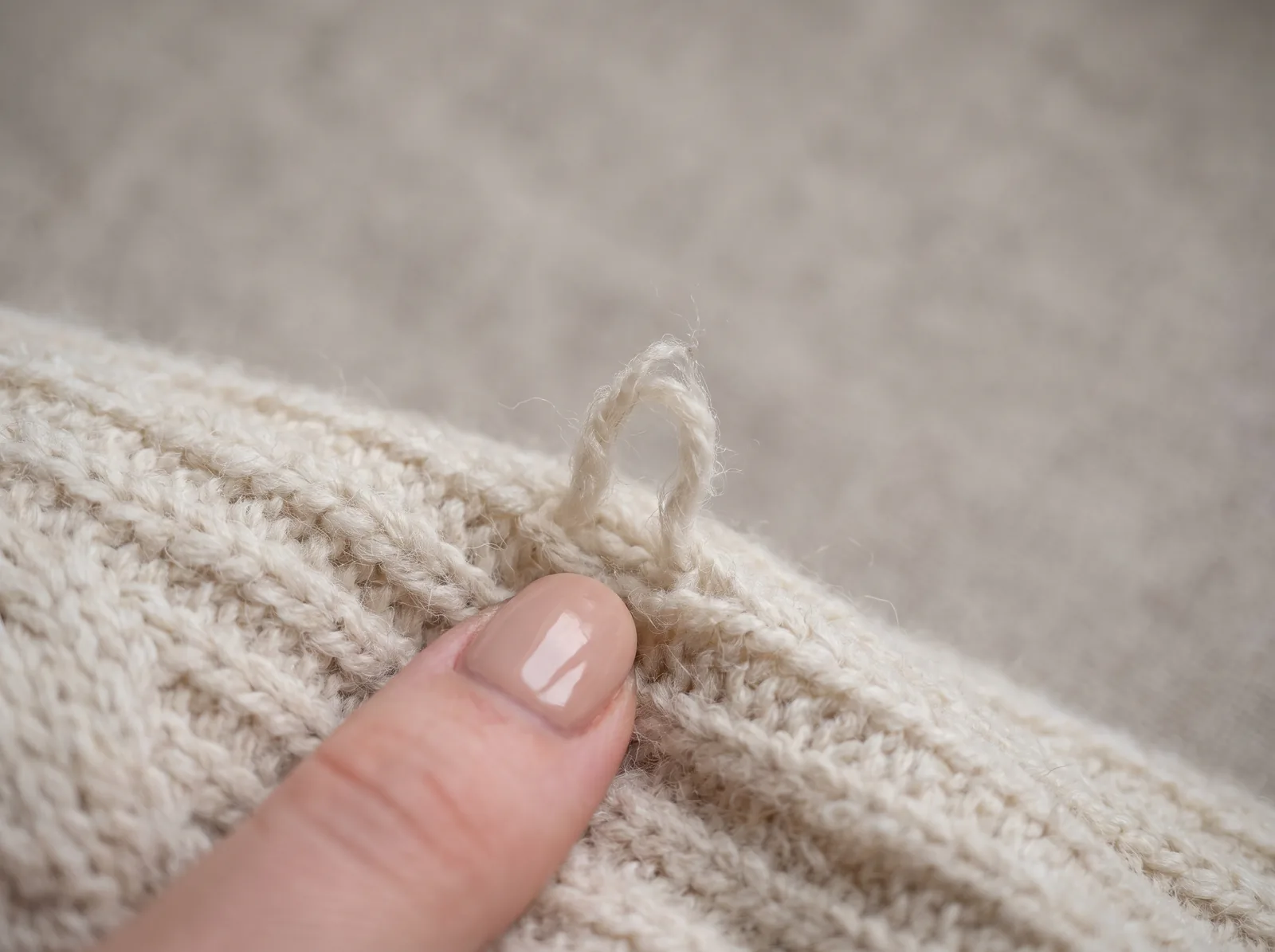
Name each one: what, where, how big, and the photo number. A flaw seen before paying is a fair sale; a flaw found in the parcel is a return. Vinted’s photo guide warns a buyer may cancel and return an item whose defects were not shown, and Grailed’s photo standards require photos of any wear or damage.
The photo set
Five to eight photos: the front as the main photo, the back, the label and size tag, a fabric close-up, every flaw, the measurements and one worn shot. The method is in how to photograph clothes to sell and the flat lay photography guide; each platform’s pixel sizes are in the product image size requirements. Keep the same spot and background for every item, as in the white background guide.
What photos do buyers want on every platform?
The short answer
Two kinds: proof and fit. Proof is the tag, the care label and every flaw, close up and sharp, which every platform above asks for. Fit is the item worn, which most buyers look for next. Take the proof photos yourself, and add the worn photo by modeling it or by making it from your flat photo with Tryly, keeping the real photos of the actual item in the listing.
A worn photo of the real garment, from a flat lay or hanger shot
With Tryly’s AI clothing photography you upload the flat, hanger or mannequin photo you already took, and the real garment is placed on a model in about 15 seconds. Choose from 500+ models, or use your own model or yourself; on a paid plan a “Same model” button brings back the model from your last shoot, so a batch of listings looks like one closet. One photo is one credit, and you start with 10 free photos, no card.
 Before
 After
After Before
 After
AfterHow to use it on a resale listing
- Keep the real photos. Your own photo of the actual item stays the main image, with the tag, label and flaw close-ups beside it; the worn photo is an extra.
- Check it at full size. Print, logo, color, length, buttons and pockets should match the item in your hand. If anything does not, do not post it.
- Keep measurements and condition in the text. A worn photo shows fit; it does not replace pit to pit and inseam.
- Follow each platform’s photo rules. Grailed’s photo standards do not allow images of individuals, and Etsy’s listing image rules require original photos of the actual item, not renderings, so keep those listings to photos you took. Vestiaire’s photo guide wants the main photo unworn, so a worn photo goes later in the set.
The test that matters
Try it on your hardest garment first.
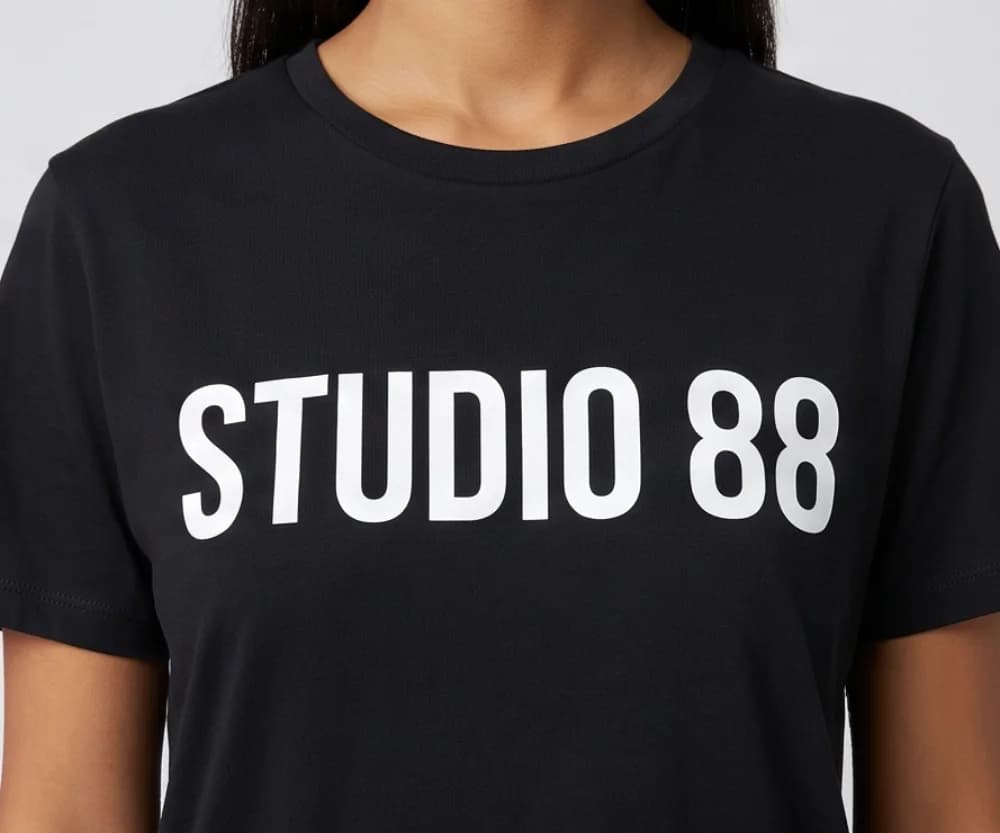
Sellers judge an AI photo tool on the piece most likely to go wrong: a print, a logo, sheer fabric or a detail that has to sit exactly right. Check the result at full size before you publish it. Here: a black T-shirt with a “STUDIO 88” slogan.
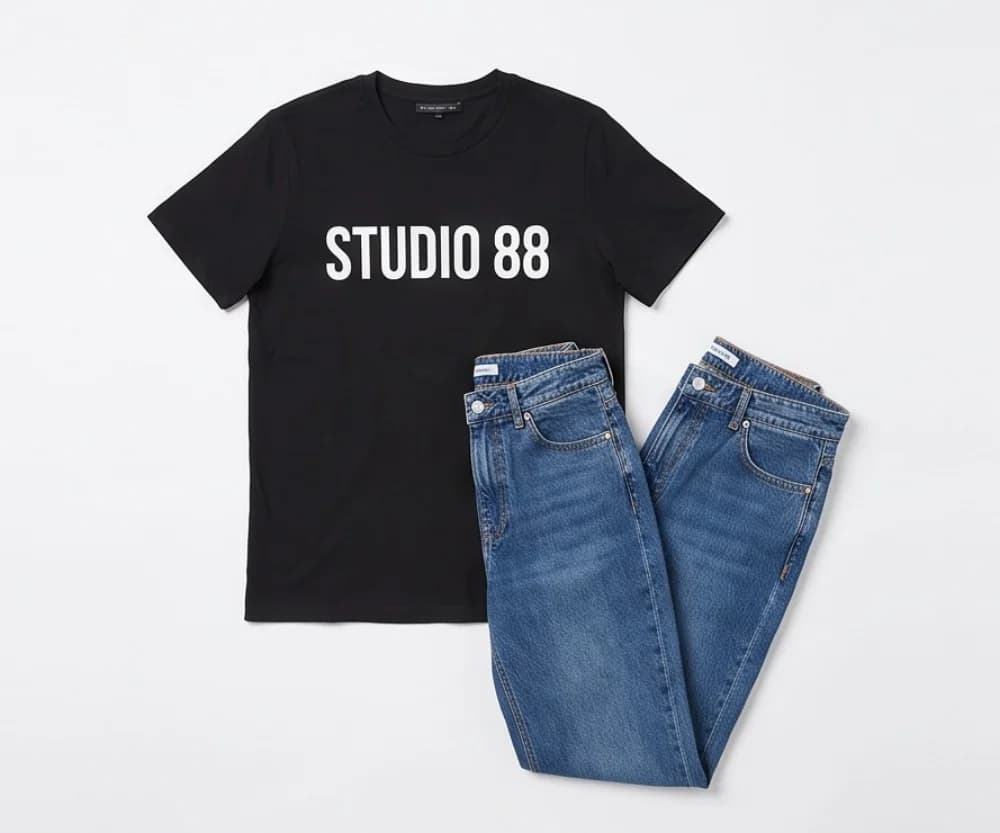
01 Product photo
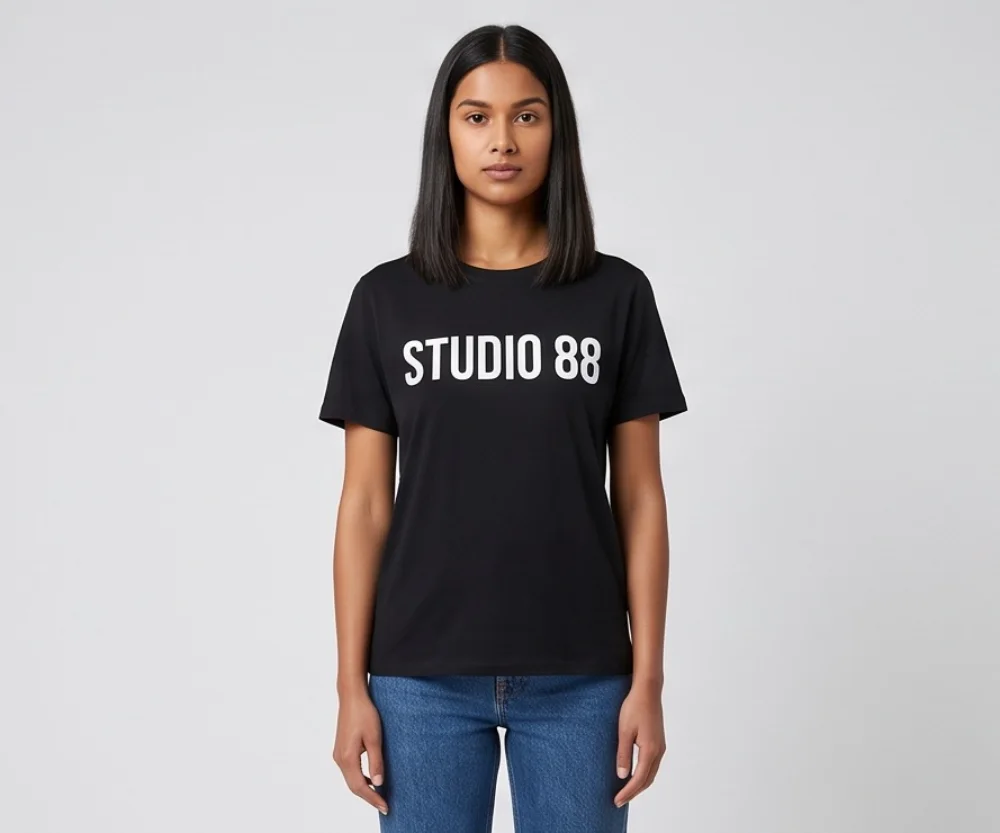
02 On the model
03 Full-size check
10 free photos, no card.
Photos made on a paid plan can be used on your store, in ads and on social media. Plans start from $9.99 a month (Starter, billed annually), from $0.33 a day, with photos as low as $0.25 each: at Tryly’s lowest rate, 100 listings with one worn photo each cost $25. Selling shoes too? The shoe photography guide covers the sole and size-label shots resale buyers check first.
Questions about selling clothes online
What is the best place to sell clothes online?+
For everyday and mid-range clothes, the resale apps: Vinted has no selling fees, Depop charges US sellers no selling fee, and Poshmark and Mercari take a cut but bring large audiences. eBay suits branded pieces and sneakers, Vestiaire Collective, The RealReal and Grailed suit designer pieces and menswear, ThredUp lists a whole bag for you, Etsy is for handmade and vintage, and Shopify is your own store.
Which app lets you sell clothes online for free?+
Vinted: its help page says there are no fees for uploading or selling, you receive the full selling price, and the buyer pays shipping. Depop charges no selling fee to sellers in the US, UK and Australia, but a 3.3% plus $0.45 processing fee in the US. Facebook Marketplace shows no fee for local sales.
How much does Poshmark take?+
A flat $2.95 on sales under $15, and 20% on sales of $15 or more, so you keep 80%. The buyer pays a flat $6.49 shipping fee on every order, and you print the label. Listing is free.
Is it better to sell on Poshmark or Depop?+
Depop costs less per sale for US sellers (no selling fee, a 3.3% plus $0.45 processing fee) and suits vintage, streetwear and one-off pieces. Poshmark takes 20% at $15 and up but suits brand-name women’s, men’s and kids’ clothes. Many sellers list on both and delete the listing where the item does not sell.
Where can I sell used clothes without listing them myself?+
ThredUp and The RealReal are consignment services. With ThredUp you fill a Clean Out Kit and send it back with a prepaid label; it inspects and photographs what it accepts and pays you a share of the sale price. The RealReal takes designer and luxury pieces, with commission set by your tier and the item. Both pay less per item than listing it yourself.
Can I show the item worn if I don’t want to model it?+
Yes. Tryly puts the garment from your flat, hanger or mannequin photo on one of 500+ models, or on your own model or yourself, and you can try it with 10 free photos, no card. Keep your real photos of the actual item, its tags and any flaws in the listing, check the worn photo at full size, and skip it where a platform asks for no people or no renderings in photos, such as Grailed and Etsy.
How many photos should a clothing listing have?+
Five to eight: the front, the back, the label and size tag, a fabric close-up, every flaw, the measurements and one worn shot. The limits are higher: 24 on eBay, 20 on Vinted and Etsy, 16 on Poshmark, 12 on Mercari, and on Depop four and a video in the app or eight on the web.
Sources: Poshmark fees, shipping rates, listing guide and seller policy; Depop seller fees, listing guide and stock images policy; Vinted selling fees, how it works and photo guide; Mercari fees, listing guide and how to sell; eBay selling fees, photo tips and picture policy; Facebook sell something on Marketplace and sell with shipping; ThredUp partner-program FAQ and Clean Out; The RealReal earnings guide; Vestiaire Collective selling fees and photo guide; Grailed fees, payment processing and photo standards; Etsy fees policy, listing guide, image guidelines and listing image rules; Shopify pricing, adding product media and product media types.
Written by
Elena Varga
Head of Content, Tryly Academy
Former e-commerce photo producer who ran catalogue shoots for fashion labels for over a decade. Writes the Academy’s guides.
- 11 years in fashion e-commerce
- 1,200+ catalogue shoots produced
Expert review
Sofia Moretti
Fashion photographer · Expert reviewer
Has shot campaigns and on-model e-commerce for fashion brands for 14 years. Reviews every Academy article for accuracy.
- 14 years in fashion photography
- Campaign and catalogue work across Europe
How we work: every Academy article is written by a specialist, reviewed by a working fashion photographer, and re-checked against its sources when prices or rules change.