Guide
How much does Plato’s Closet pay for clothes?
What Plato’s Closet stores say they pay, how Buffalo Exchange, Crossroads and Clothes Mentor compare, and when selling the same piece online leaves you more.

 By Elena Varga
 · Reviewed by Sofia Moretti |Fact-checked|12 min read
Key takeaways
- 1Plato’s Closet pays a share of its own price, set store by store: individual store pages say 20% to 40%, and the store prices pieces at 50–70% off original retail. You are paid cash on the spot.
- 2Buffalo Exchange pays 25% cash or 50% store credit; Crossroads 25–40% cash or 45% trade; Clothes Mentor roughly 25–30% of a price set at about a third of retail.
- 3A piece that sells for $40 online leaves $32 to $40 after fees. The same $40 tag in a store pays $8 to $16 in cash, but today, for a whole bag, with no photos or shipping.
10 free photos, no card. Photos as low as $0.25 each.
On this page+
How much does Plato’s Closet pay for clothes?
The short answer
Plato’s Closet pays a share of the price it will sell your piece for, and the share is set by each store. Individual store pages state between 20% and 40% of the store’s price, and stores price clothes at 50–70% off the original retail price. If you accept the offer, you are paid in cash on the spot.
Plato’s Closet’s main selling page names no percentage. It says only that you bring in gently used name-brand clothes, shoes and accessories with no appointment, and that each franchise is independently owned and operated. That is why the number changes from town to town.
The stores that do publish a payout on their own page say this:
| Plato’s Closet store | What its page says you get |
|---|---|
| Omaha West, NE | 20–30% of the store’s selling price |
| Madison East, WI | 30% of the store’s price |
| Roanoke, VA | A third of the store’s price, cash on the spot |
| Parkersburg, WV | 30–40% of the store’s retail price, cash or store credit |
| London North, ON (Canada) | Typically 20–35% of what the store prices items at |
So the “about 30–40%” you see on reseller blogs is true at some stores and too high at others. The base it applies to matters just as much: Omaha West and Madison East say their prices run 50–70% below original retail, so the percentage is of a price already well under what you paid.
How does selling to Plato’s Closet work?
The short answer
You bring clean, folded clothes to the store with a photo ID, sign in, and browse while a buyer reviews them. The buyer makes one offer for the pieces the store wants; you accept, refuse or take some back, and you are paid on the spot. No appointment is needed.
- Find your store and check its page. Each Plato’s Closet is independently owned, so the payout, ID rules and buying hours are set store by store.
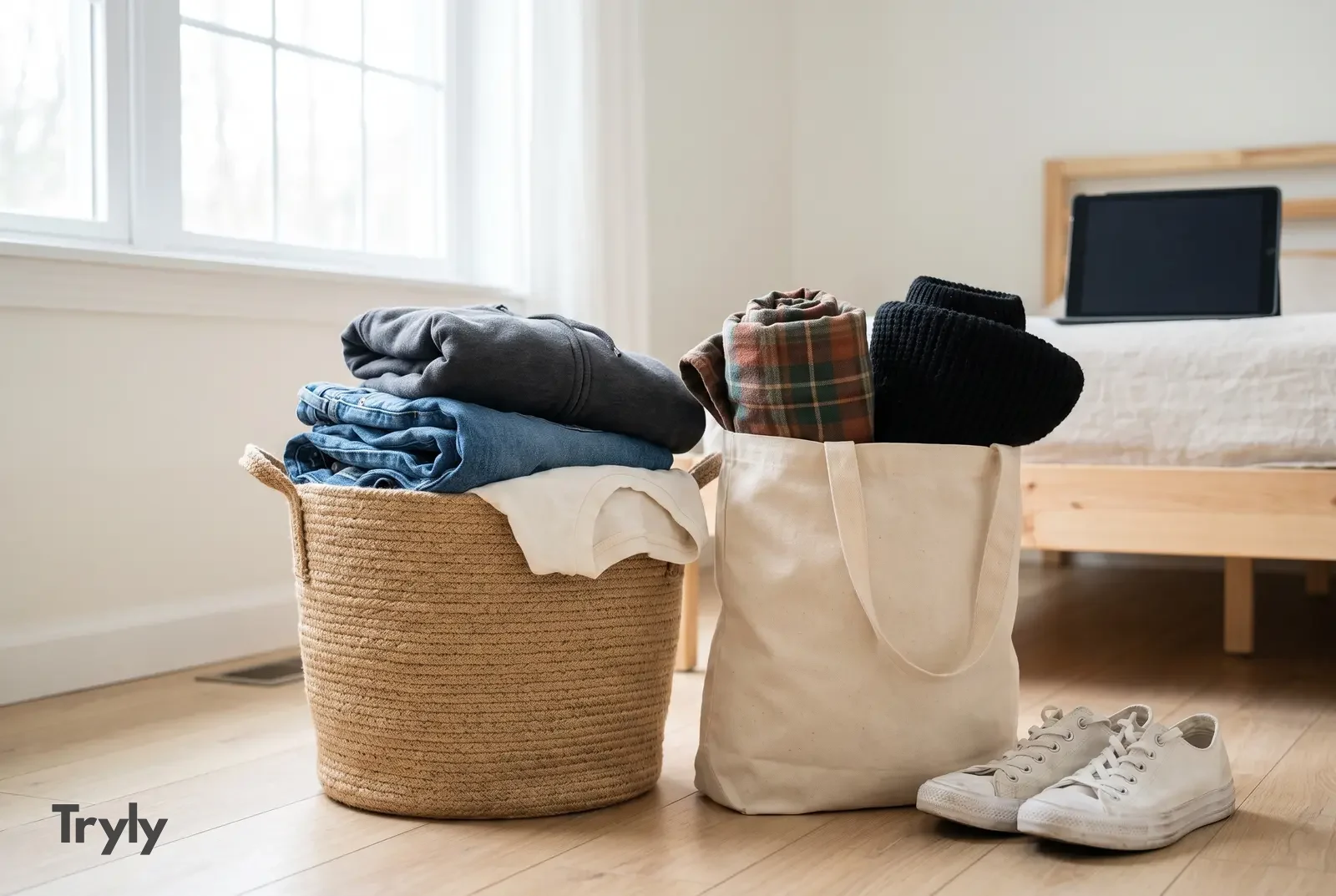
- Wash, fold and pack. Bring clean, folded pieces off the hanger in a laundry basket, bin or reusable tote; some stores ask you not to use trash bags.
- Bring a photo ID. Store pages ask for a driver’s license, state ID or passport, and some want the physical card.
- Sign in and shop while they sort. There is no appointment: it is first come, first served, and two store pages say a review usually takes around 15 to 20 minutes.
- Take the offer, or part of it. Offers are not negotiable, but you can refuse the offer or take back pieces before you accept.
- Get paid on the spot. You leave with cash, or store credit where the store offers it, and take home anything it did not buy.
The offer depends on more than condition. San Mateo’s store page says it bases the offer on style, condition, brand and its inventory needs, so a store already full of hoodies may pass on yours while the next town over takes it.
What does Plato’s Closet buy, and what does it turn down?
The short answer
Plato’s Closet buys gently used, current teen and young adult clothes, shoes and accessories in all seasons. Its store pages say they turn down formal and business wear, sleepwear, undergarments, children’s sizes and anything stained, torn, smelly or worn out.
| What stores look at | What their pages say |
|---|---|
| Styles | Gently used teen and young adult clothes, shoes and accessories, including outerwear and athletic wear, in all seasons. |
| Sizes | Girls’ sizes 0 to 6X and guys’ sizes 28 to 3X, per the main selling page. |
| Brands | Mall and athletic names such as Abercrombie & Fitch, American Eagle, Levi’s, Lululemon, Nike, Free People, Zara and Urban Outfitters. |
| Condition | Gently used, current in style, freshly laundered, free of rips, stains, odors, smoke and pet hair. |
| Turned down | Formal and business wear, suits, men’s dress shirts, sleepwear, scrubs, undergarments, children’s sizes, worn-out or over-washed pieces, and styles a store is overstocked on. |
| Designer pieces | Tell the buyer first. Stores say they only buy designer items they are 100% sure are authentic. |
The turn-down list is pieced together from Madison East (nothing too formal or professional), Roanoke (no business casual, formal, sleepwear, scrubs or undergarments), San Mateo (no children’s, mature or formal) and Parkersburg (no smells, stains, holes or over-washing).
Business wear is not a lost cause: Clothes Mentor and Buffalo Exchange, below, buy a wider range.
How much does Plato’s Closet pay for jeans?
The short answer
Plato’s Closet pays for jeans the same way as for anything else: the 20–40% share that store pages state, taken from the price it tags them at. No store page gives a dollar figure, but for jeans that cost $60 new the math lands between about $3.60 and $12.00.
Denim is something the stores ask for. Manchester’s most wanted page asks for gently used jeans, shorts, skirts and jackets, and buys guys’ waist sizes 28 to 42. San Mateo lists the denim brands it wants: Abercrombie, Hollister, JNCO, PacSun, True Religion and White Fox.
Here is the math for one pair that cost $60 new, at the three payout rates store pages state:
| Jeans, $60 new | At 20% | At 30% | At 40% |
|---|---|---|---|
| Store tags them at 50% off ($30) | $6.00 | $9.00 | $12.00 |
| Store tags them at 70% off ($18) | $3.60 | $5.40 | $7.20 |
Where the pair lands depends on brand, style, condition and what the store already has. Parkersburg passes on over-washed pieces, and Buffalo Exchange on fabric that is shrunken or stretched out of shape.
A pair of premium or vintage jeans that buyers search for by name, such as a sought-after Levi’s cut, is often worth more listed online. Measure it first: the guide to measuring clothes for selling shows the waist, rise and inseam buyers ask for.
How much do Buffalo Exchange, Crossroads and Clothes Mentor pay?
The short answer
Buffalo Exchange pays 25% of its selling price in cash or 50% in store credit. Crossroads pays 25–40% in cash or 45% in trade. Clothes Mentor prices items at about a third of original retail and offers roughly 25–30% of that. All three pay the same day.
| Store | What it buys | What it pays | What to bring and know |
|---|---|---|---|
| Buffalo Exchange | Men’s and women’s clothing, shoes and accessories, current styles to vintage, plus sizes and designer | 25% of its selling price in cash, or 50% in store credit that never expires | Government-issued ID (under 18: come with an adult who has one); no appointment; no selling by mail |
| Crossroads | Clean, odor-free, on-trend clothing in excellent condition, including designer pieces | 25–40% of its selling price in cash, or 45% in trade credit | Valid photo ID; 18 or older, or with an adult; join the waitlist by app; sell-by-mail bags offered |
| Clothes Mentor | Women’s clothing in sizes 0–26, shoes, handbags, accessories and designer items | Prices at about a third of original retail, then offers roughly 25–30% of that, in cash or store credit | Bring your ID; no mail-in; buys every day until an hour before closing |
Buffalo Exchange: cash or double in trade
Its how to sell page pays 25% of its selling price in cash or 50% in store credit, and its buyers choose by style, condition and inventory needs. Its selling tips add that trade works at any Buffalo Exchange, and its sell by mail program has been discontinued, so every item is seen in person.
Crossroads: a sliding cash rate
Crossroads’ buy, sell, trade page pays 25–40% of its store price in cash, with higher payouts for premium pieces, or 45% in trade credit good at any of its stores. It cannot buy anything missing a button, with a tiny tear or a broken zipper.
Clothes Mentor: women’s sizes 0–26
Clothes Mentor’s how it works page prices items at about a third of original retail and offers roughly 25–30% of that; its FAQ rounds it to about a third. A $90 dress would be tagged near $30, for an offer of about $7.50 to $9.00. It takes no mail-in items.
Store or online: what does a $40 piece actually leave you?
The short answer
A piece that sells for $40 online leaves you $32 to $40 after platform fees. If a store tags the same piece at $40, it pays $8 to $16 in cash, or up to $20 in store credit. Online pays two to five times more per piece; the store pays today and takes the whole bag.
| Where it sells | You get | How |
|---|---|---|
| Buffalo Exchange, cashStore, if tagged at $40 | $10.00 | 25% of its $40 tag, paid the same day |
| Buffalo Exchange, tradeStore, if tagged at $40 | $20.00 credit | 50%, spendable only in its stores |
| Crossroads, cashStore, if tagged at $40 | $10.00–$16.00 | 25–40% of its tag |
| Plato’s Closet, cashStore, if tagged at $40 | $8.00–$16.00 | 20–40%, depending on the store’s page |
| Clothes Mentor, cashStore, if tagged at $40 | $10.00–$12.00 | Roughly 25–30% of its tag |
| Vinted | $40.00 | No selling fee |
| Depop (US) | about $38.23 | 3.3% + $0.45 processing, also charged on shipping and tax |
| Mercari | $36.00 | 10% of the item, plus 10% of buyer-paid shipping |
| Grailed (menswear) | about $35.71 | 6% under $120, plus 3.49% + $0.49 processing |
| eBay | $34.16 | 13.6% + $0.40, also charged on shipping and tax |
| Poshmark | $32.00 | 20% on sales of $15 or more |
Fees from each platform’s own page: Vinted, Depop, Mercari, Grailed with its processing fee, eBay and Poshmark. Online figures are before any shipping you pay, packing supplies or returns.
The store rows are generous to the store. Plato’s Closet and Clothes Mentor set their tag from the original retail price, not from what the piece fetches online. If a piece that sells for $40 online gets a $20 tag in store, the payout is half what the table shows.
The fair way to judge it is the difference per piece. Online leaves roughly $16 to $32 more, and you earn it by photographing, measuring, listing, answering questions, packing, shipping and waiting. If that takes you 30 minutes a piece, an extra $20 works out at $40 an hour. On a $10 piece, it does not.
When is selling to a store the better deal?
The short answer
Sell to a store when you have a bag of ordinary, current pieces and want them gone today, or when each piece would sell for under about $20 online. Sell online when a piece is worth $25 or more, has a brand buyers search for, or is something the store will not buy.
The store wins when
- You have 20 basics worth $5 to $15 each: one trip beats 20 listings.
- You need the money today, or the space in your closet this week.
- You would spend the store credit anyway: Buffalo Exchange doubles its rate in trade.
- You dislike photographing, messaging buyers and shipping.
Selling online wins when
- A piece would sell for $25 or more, especially designer, vintage or premium denim.
- The store will not buy it: formal wear, suits, out-of-season or older styles.
- You already list other things and can add pieces to an existing routine.
- You can wait a few weeks for the right buyer.
The split that works for most closets: sort first, list the handful of pieces worth the effort online, and take the rest to the store in one trip. Whatever the store passes on can go to a local charity. For the online side, see where to sell clothes online, and for shoes, where to sell shoes.
How do you prepare clothes for the buy counter?
The short answer
Wash, lint-roll and fold every piece right side out, check for missing buttons, broken zippers, stains and pilling, and pack them in a basket, bin or reusable tote. Bring a photo ID. Clean, current pieces in season get the best offers.
| Step | Why it matters |
|---|---|
| Wash and dry everything | Every store page asks for freshly laundered items. Buffalo Exchange notes it does not launder before pieces go on the rack. |
| Lint-roll and de-pill | Pet hair and pilling are on the turn-down lists. A lint roller and a fabric shaver take minutes. |
| Check the details | Missing buttons, broken zippers, tiny tears and stains are all reasons to pass. Fix what you can; keep the rest for donation. |
| Fold, right side out | Take pieces off the hangers, turn them right side out and fold them. Buyers sort faster through a neat stack. |
| Sort by season | Buffalo Exchange starts buying for the coming season a few months ahead, so an out-of-season piece it passes on may sell there later. |
| Pack it right | A basket, bin or reusable tote you can lift. Omaha West asks for no plastic, paper or trash bags; London North for no garbage bags or luggage. |
| Bring ID and your phone | A photo ID to sell, and a phone for the stores that text you when your offer is ready. |
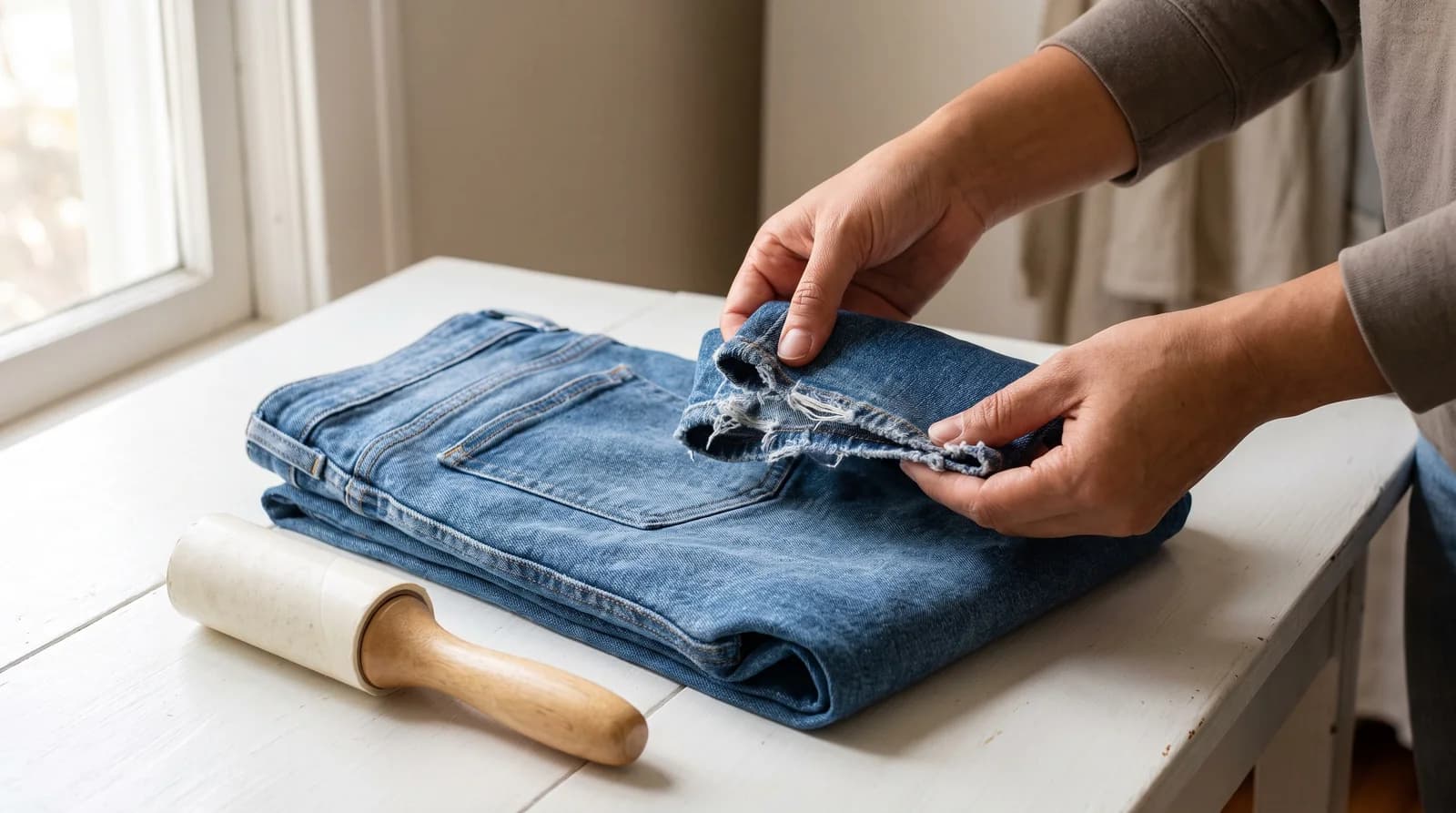
Buffalo Exchange’s selling tips list what it cannot buy: missing buttons, broken zippers, tears and rips, excessive wear, peeling fabric, pilling, and anything shrunken or stretched out of shape. Parkersburg’s Plato’s Closet asks you not to bring back items it already turned down, because it slows the line.
Stores work first come, first served: London North’s store page aims for a review in under 30 minutes but warns busy days run longer.
Selling online instead? Photos that sell the piece
The short answer
If you keep the better pieces to sell online, the photos do most of the work. Shoot each piece flat or on a hanger in daylight, then add the tags, the flaws and the measurements. On-model photos help buyers see the fit, but where they may go depends on the platform.
The method, from light to angles, is in how to photograph clothes to sell. Platform by platform, the Poshmark, Depop and eBay guides cover listings, and the Grailed fees guide works through menswear numbers.
Where an on-model photo may go
Depop, Mercari, Vinted and Grailed want photos you took of the actual piece, so keep your listings there to your own photos. Poshmark’s seller policy asks for listings that “include your original photos of the items” and says the item “should be clearly represented in the main photo.” eBay’s picture policy bans “stock photos for used, damaged, or defective items” and photos that “don’t accurately represent the item.”
So on Poshmark and eBay, your own photo of the real piece leads, and an accurate on-model photo can follow as an extra. On your own store, your Instagram and in ads, the on-model photo can lead.
 Before
 After
AfterWith Tryly’s AI clothing photography you upload that one photo and choose from 500+ models, or use your own model or yourself. One credit makes one photo. Check each result at full size against the piece in your hand: color, length, pockets and hem.
Photos made on a paid plan can be used on your store, in ads and on social media. Plans start from $9.99/month, from $0.33 per day, and photos cost as low as $0.25 each: two on-model photos for each of 20 pieces, 40 photos, cost $10. Start with 10 free photos, no card.
Questions about what Plato’s Closet pays
How much does Plato’s Closet pay for clothes?+
A share of the price the store will sell the piece for, set store by store. The pages of individual Plato’s Closet stores state between 20% and 40%: Omaha West says 20–30%, Madison East 30%, Roanoke a third, Parkersburg 30–40% and London North in Canada 20–35%. The main Plato’s Closet site gives no percentage, only that you are paid cash on the spot if you accept the offer.
Is it true that Plato’s Closet pays 30–40%?+
At some stores. Parkersburg’s page says sellers get 30–40% of its retail price, but Omaha West’s page says 20–30%. Each Plato’s Closet is independently owned, so check your own store’s page before you go.
How much does Plato’s Closet pay for jeans?+
Jeans are paid like everything else: a share of the store’s own price, which store pages put at 50–70% off the original retail price. For jeans that cost $60 new, that works out at roughly $3.60 to $12.00, depending on the store’s tag and its payout rate. Stores base the offer on style, condition, brand and what they need in stock.
How much does Buffalo Exchange pay for clothes?+
Buffalo Exchange pays 25% of its selling price in cash or 50% in store credit, on the day you sell. Trade credit never expires and works at any Buffalo Exchange. You need a government-issued ID, no appointment, and it no longer buys by mail.
What do I need to bring to sell at Plato’s Closet?+
Clean, folded clothes off the hanger in a basket, bin or reusable tote, and a photo ID such as a driver’s license, state ID or passport. Some stores want the physical ID, not a photo of it. There is no appointment; stores work first come, first served.
Is it better to sell clothes to Plato’s Closet or online?+
Online pays more per piece: a $40 sale leaves you $32 to $40 after fees, against $8 to $16 in cash if a store tags the same piece at $40. The store wins on time and bulk: you are paid the same day for a whole bag, with no photos, messages or shipping. Sell the few pieces worth over $25 or so online and take the rest to the store.
Can I use on-model photos made with Tryly when I sell online?+
On your own store, Instagram and ads, yes, if the photos are made on a paid plan. On Poshmark and eBay, your own photo of the real piece comes first and an on-model photo can follow as an extra. Keep them out of Depop, Mercari, Vinted and Grailed listings, which want your own photos.
Sources: Plato’s Closet sell to us and store pages for Omaha West, Madison East, Roanoke, Parkersburg, San Mateo, Manchester and London North; Buffalo Exchange how to sell, selling tips and sell by mail; Crossroads; Clothes Mentor how it works and FAQ; fees from Poshmark, Depop, Mercari, eBay, Grailed (processing) and Vinted; Poshmark seller policy and eBay picture policy.
Written by
Elena Varga
Head of Content, Tryly Academy
Former e-commerce photo producer who ran catalogue shoots for fashion labels for over a decade. Writes the Academy’s guides.
- 11 years in fashion e-commerce
- 1,200+ catalogue shoots produced
Expert review
Sofia Moretti
Fashion photographer · Expert reviewer
Has shot campaigns and on-model e-commerce for fashion brands for 14 years. Reviews every Academy article for accuracy.
- 14 years in fashion photography
- Campaign and catalogue work across Europe
How we work: every Academy article is written by a specialist, reviewed by a working fashion photographer, and re-checked against its sources when prices or rules change.