Guide
How to become a clothing reseller: sourcing, pricing, listing and selling
For part-time flippers turning thrift finds, estate-sale bags and their own closet into a side business: what to buy, how to price it, a batch-day listing routine, and how to keep it organized as it grows.

 By Elena Varga
 · Reviewed by Sofia Moretti |Fact-checked|13 min read
Key takeaways
- 1Pick one or two niches you can recognize on a rack, and buy only what sold listings say you can sell at a profit after fees and shipping.
- 2Work in batches: prep, photograph, measure, list and cross-list a whole pile in one session, and give every item a SKU and a bin.
- 3Listing photos on Vinted, Depop, Mercari and Etsy must be your own. On-model photos made with Tryly belong on your own store, Instagram and ads, and on Poshmark as an extra after your main photo.
10 free photos, no card. Photos as low as $0.25 each.
On this page+
How do you become a clothing reseller?
The short answer
How to become a reseller of clothes, in ten steps: pick a niche, source cheaply, check sold listings before you buy, verify designer pieces, clean and repair everything, price from sold comps after fees, list in batches, start on one or two reselling apps, keep records, and ship fast. You can start this weekend with your own closet and a phone.
A closet clear-out becomes a side business when you add a system: buying with numbers, listing in batches, and knowing where every item is. This guide builds that system step by step.
What does a clothing reseller actually do?
The short answer
A clothing reseller buys secondhand or surplus clothes below what buyers will pay, then cleans, photographs, lists, sells and ships them. Most of the work happens after the buying, at home.
Be realistic about where the hours go. A typical week of reselling clothes looks like this:
- Sourcing: a few trips to thrift stores or sales, with your phone out to check prices.
- Processing: washing, repairs, steaming, photos, measurements and writing listings. This is the bulk of the time.
- Selling: answering questions, accepting offers, sharing or refreshing listings.
- Shipping and admin: packing orders, drop-offs and recording every purchase and sale.
Income is uneven at the start. Some finds sell in a day; others sit for months. Measure your own numbers from the first sale: profit per item and profit per hour.
Step 1: What are the best things to resell?
The short answer
The best things to resell are clothes you can recognize and price fast. A niche lets you scan a rack in minutes, spot the good labels and build a shop repeat buyers follow. Start with one or two categories you already know.
Vintage
Older labels, made-in tags, construction and era details. Rewards knowledge; condition matters a lot.
Denim
Brand, fit name and measurements drive the sale. Easy to photograph and to ship flat.
Outerwear
Coats and jackets carry higher prices, but they are bulky to store and cost more to ship.
Designer
The highest prices and the most risk. Only buy what you can verify as genuine (Step 4).
Kids’ clothes
Buyers often shop in bundles by size. Condition and stains decide everything.
Plus-size
Buyers look for measurements and fit photos. Accurate measurements win repeat customers.
Step 2: Where do resellers find clothes to sell?
The short answer
Resellers find clothes in their own closet first, then in thrift stores, outlets and bins, estate and garage sales, consignment shops and wholesale lots. The cheaper the piece, the more digging, washing and sorting it takes.
| Source | Cost per piece | Your time | Trade-off |
|---|---|---|---|
| Your own closet | Nothing: already paid for | Low | The best place to learn listing and shipping; runs out fast. |
| Thrift stores | Low to medium, set by the store | Medium: rack by rack | Steady supply and returns are rare, so buy only what you have checked. |
| Outlets and bins (sold by weight) | The lowest per piece | High: digging, washing, sorting | Most pieces will not sell; you are paying in time and laundry. |
| Estate and garage sales | Low, and often open to a bundle price | High: travel, early starts | Whole wardrobes, older labels and vintage; unpredictable. |
| Consignment shops | Higher: already priced by a shop | Low | Cleaner, sorted stock, but a thinner margin per piece. |
| Wholesale lots and bales | Low per piece, paid in bulk | Medium to high: sorting | You buy blind; mixed sizes, condition and brands. |
Thrift flipping: how to work a rack
- Scan labels, not hangers. Run your hand along the rack and read brand tags; stop only for labels and fabrics you know.
- Check condition in good light: armpits, collars, cuffs, hems, zippers, seams and every button. Hold it up to a window for holes and thin spots.
- Look it up before the cart. Search sold listings on your phone (Step 3). No comps, no buy.
- Keep every receipt. Your cost per piece is the number your profit depends on, and your records need it (Step 9).
Step 3: How do you know what will sell?
The short answer
You know what will sell by checking sold listings, not asking prices. An asking price shows what one seller hopes for; a sold price shows what a buyer paid. Search the brand and item on your platforms and look only at what sold.
- Search like a buyer: brand, item type, and one detail such as the fit, fabric or era.
- Filter to sold items where the platform offers it, and note three to five recent sales in similar condition.
- Note how many are listed versus sold. Lots of unsold copies means slow sales or too-high prices.
- Compare like for like: the same size range, condition and season, with or without original tags.
eBay’s product research tool, in the Research tab of Seller Hub, shows trends in prices, sales volumes and product availability over time, and eBay says it is free to all sellers.
On the other apps, keep a note on your phone of what sold and for how much. After a few weeks it becomes your own price guide for your niche.
Step 4: How do you check designer pieces are real?
The short answer
To check a designer piece is real, compare every detail with one you know is genuine: brand tag, care label, stitching, hardware, zipper pulls and any serial or date code. If you cannot verify it, do not list it as that brand.
- Photograph the proof. Tags, labels, codes and hardware close up; buyers of designer pieces look for them first.
- Poshmark: Posh Authenticate covers select luxury items sold for $500 or more. If Poshmark cannot verify the item, the order is cancelled and refunded, and the item goes back to the seller and cannot be relisted.
- eBay: the Authenticity Guarantee has authenticators examine eligible sneakers, handbags, watches, jewelry and streetwear before the buyer receives them.
- When in doubt, pass. A cheap designer piece that turns out fake costs you the purchase, the return and your shop’s reputation.
Step 5: How do you clean, repair and steam resale clothes?
The short answer
Clean resale clothes as the care label says, fix what takes minutes, and steam every piece before it goes near the camera. Clean, pressed clothes photograph better and draw fewer complaints.
- Clean: wash or spot-clean as the care label says. Check for smells; buyers mention them in reviews.
- Quick repairs: loose buttons, a small open seam, a dropped hem. Skip anything that needs a tailor unless the price justifies it.
- De-pill and de-lint: a fabric shaver for knits, a lint roller for everything dark.
- Steam: creases show in every photo, so steam each piece on its hanger just before you shoot.
- Record what is left. Any flaw you cannot fix goes in the listing, named and photographed.
Step 6: How do you price resale clothes?
The short answer
Price resale clothes from recent sold prices for similar pieces, then subtract the platform fee, any shipping you pay, what the item cost you and supplies. What is left is your profit; if it is too small, list elsewhere or skip that kind of buy next time.
Fees differ between platforms, so one piece can earn different amounts. Two examples for a jacket that cost you $8:
- Poshmark at $40: its fee page says Poshmark takes a 20% commission on sales of $15 or more, so you keep $32, or $24 after the $8 you paid.
- Vinted at $40: its help page says there are no fees for uploading or selling and you receive the full selling price, so $40, or $32 after the $8 you paid.
Fees change, so check each platform’s fee page before you price. The full fee comparison for Poshmark, Depop, Vinted, Mercari, eBay and others is in where to sell clothes online.
Step 7: What is the best way to resell clothes? A listing routine
The short answer
The best way to resell clothes is in batches: one day for prep, photos, measurements and listings, working through the whole pile in the same order with the same setup. Batching is faster and keeps your shop consistent.
| Block | What you do | Why |
|---|---|---|
| Prep | Wash, repair, de-pill, steam; hang each piece with a numbered tag | Nothing gets photographed twice |
| Photograph | One spot, one light, one background; the same shot list for every item | A matching look across your shop |
| Measure | Flat, with a soft tape: pit to pit, length, waist, rise, inseam | Fewer “will it fit?” messages and returns |
| List | Title, measurements, flaws, price from your comps; one sitting | Your writing stays consistent |
| Cross-list | Copy the listing to your second platform; note where each item is live | More buyers see it, with no double sale |
| Store | Fold into a bin labeled with the item’s SKU | You can find it in seconds when it sells |
Photograph
Photos are where most resellers lose time. Use one spot by a window with a plain background, and shoot every item the same way: front, back, brand and size tag, fabric, every flaw and a worn shot. The full method is in how to photograph clothes to sell.
Measure
Sizes vary by brand and decade, so buyers trust numbers more than labels. Measure every piece flat with a soft tape, the same way each time; the full method, garment by garment, is in how to measure clothes for selling.
List and cross-list
Lead the title with the words a buyer types into search (the label, the piece, its size), then give measurements, fabric and every flaw. Cross-listing (the same item on a second platform) reaches more buyers. To avoid selling it twice, track where each SKU is live and end the other listings once it sells.
Step 8: Which reselling clothes app should you start on?
The short answer
Start on the reselling clothes app where your niche already sells. Use one or two apps, learn their fees, photo rules and shipping, and add another only when your routine runs smoothly.
Poshmark
Brand-name clothing and a social, share-to-sell style. Read the Poshmark guide
Depop
Vintage, streetwear and one-off pieces for a style-led crowd. Read the Depop guide
Vinted
Everyday clothes, with no selling fee for the seller. Read the Vinted guide
Mercari
Everyday clothes and accessories next to everything else. Read the Mercari guide
eBay
Branded, searchable and collectible pieces, and buyers who search by model. Read the eBay guide
Where on-model photos fit in a resale business
The short answer
On-model photos fit a resale business on the channels you control: your own store, Instagram and ads. Listings on Vinted, Depop, Mercari, Etsy and eBay need photos you took of the actual item. On Poshmark, an on-model photo can follow your own main photo.
Follow each platform’s photo rules
- Depop and Vinted: your own photos only. Depop’s stock images policy says “Only use photos taken by yourself.” Vinted’s catalog rules say photos “have to be taken by you”.
- Mercari and Etsy: the same. Mercari’s Prohibited Conduct policy lists “Using photos that you do not own or have not taken yourself”. Etsy’s listing image rules require original photos of the actual item, not renderings. For a worn look on these apps, try the piece on yourself.
- eBay: your own photos of the actual item. Its picture policy bans “Stock photos for used, damaged, or defective items” and “Photos that don’t accurately represent the item”.
- Poshmark: an extra, not the cover. Its seller policy asks for your original photos of the items and says the item “should be clearly represented in the main photo.” Keep your own photo first, then tags and flaws, and an on-model photo further down.
Your own shop, Instagram and ads
Once you have a following, you may open your own store and post drops on Instagram. There, a clean on-model photo of each find makes the feed look like one shop.
With Tryly’s AI clothing photography, you upload the flat, hanger or mannequin photo you took on batch day, and the real piece is placed on a model in about 15 seconds. Choose one of 500+ models, your own model or yourself. On a paid plan, the “Same model” button brings back your last model, so one person wears the whole drop.
 Before
 After
AfterCheck every photo at full size before you post it: color, neckline, cuffs, length and any print should match the piece in your hand. Photos made on a paid plan can be used on your store, in ads and on social media.
Plans start from $9.99/month (Starter plan, billed annually), from $0.33 a day, and photos cost as low as $0.25 each: one photo for each of 100 finds is $25 at Tryly’s lowest rate. Test it first with 10 free photos, no card.
Step 9: Records, sales tax and the business side
The short answer
A clothing reseller should record every purchase, sale, fee and supply cost from day one, and check tax and permit rules with the state, the local authority and an accountant. Reselling for profit is a business, even part-time.
- Records. The IRS says you may choose any recordkeeping system that clearly shows your income and expenses. A spreadsheet with one row per SKU (cost, where bought, date listed, platform, sale price, fees, shipping) covers most of it. Keep receipts.
- Sales tax. The SBA says tax laws vary by location and business structure, so check with state and local governments. Poshmark’s sales tax page says it calculates, collects and submits state and local sales tax on the seller’s behalf. Your own store can be different.
- Resale certificates and permits. Ask your state revenue department whether you need a seller’s permit and whether you can buy stock for resale without paying sales tax. The SBA’s permits guide adds that zoning ordinances can still apply to home-based businesses.
- Income tax. Ask an accountant how your sales are taxed where you live, and what you can deduct.
Step 10: How do you ship what sells?
The short answer
Ship resale clothes fast: keep a packing spot ready, ship within the platform’s deadline, and send each piece clean, folded and protected. Where you buy your own label, weigh the parcel and compare services.
Stock mailers in two or three sizes, tape, a small scale and a printer or label-printing option. Pack as soon as something sells, and drop off daily or on fixed days. Carriers, box sizes and how to keep costs down are covered in the cheapest way to ship clothes.
How do you grow reselling clothes into a real side business?
The short answer
To grow reselling into a real side business, give every item a SKU and a bin, batch every task, and keep one sheet that shows what you own, where it is and where it is listed. That system lets you list more without more chaos.
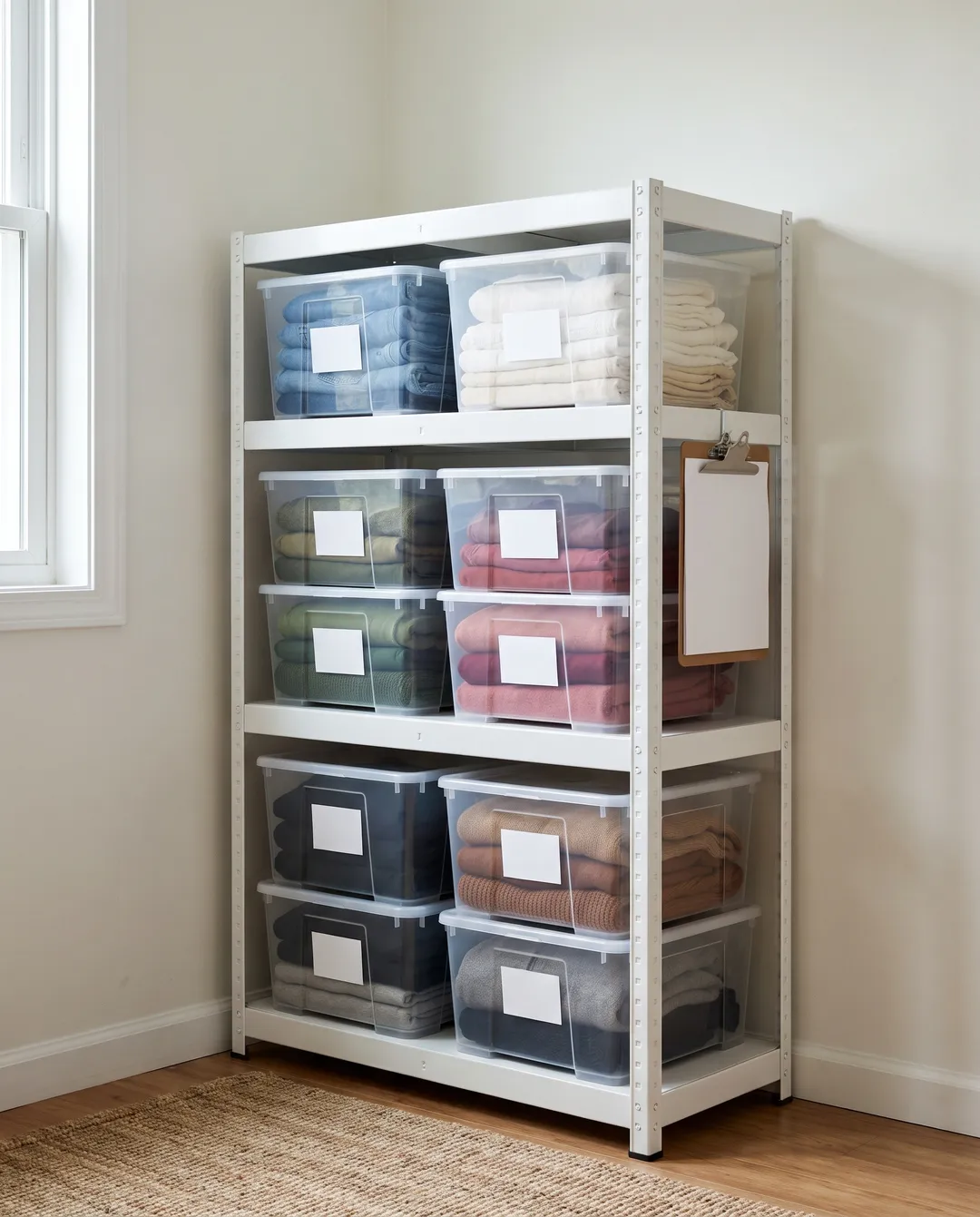
- SKU labels. A short code on a tag or sticker: bin number plus item number, such as B04-017. Put the same code in the listing’s private notes or your sheet.
- Numbered bins. Clear, stackable bins on a shelf, one number each. Fold listed items in; pull them out when they sell.
- Review monthly. Which categories, sources and platforms made money per hour? Buy more of those and drop the rest.
What mistakes do new resellers make?
The short answer
New resellers most often buy without sold comps, forget fees when pricing, hide flaws and let stock pile up unlisted. Each mistake costs money you do not see until later.
- Hiding flaws. A flaw shown up front is a fair sale; a flaw found in the parcel is a return and a bad review.
- An unlisted pile. Unlisted stock cannot sell. Buy no more than your next batch day can handle.
- Borrowed photos. Stock or copied photos break the rules on most resale apps. Use your own wherever a platform asks for them.
- No records. Rebuilding a year of purchases from memory at tax time is painful. Log every item as you buy it.
Questions about becoming a clothing reseller
How do I become a clothing reseller with little money?+
Start with your own closet. Selling pieces you already own teaches you photos, measurements, listings and shipping without buying stock. Put the money from those sales into a few thrift finds in one niche, check sold listings before each purchase, and grow from what sells.
What are the best things to resell?+
The best things to resell are pieces you can recognize and price quickly: branded denim, outerwear, vintage, designer items you can check are genuine, kids’ clothes in good condition, and plus-size pieces. The best test is not a list but sold listings: if similar pieces have sold recently on your platform, it is worth a look.
Is thrift flipping still worth it?+
Thrift flipping can still be worth it if you buy with sold comps in hand. Thrift prices, platform fees and shipping all eat into the margin, so work out what you keep before you buy, track your time as well as your money, and pass on anything you cannot price.
What is the best reselling clothes app for beginners?+
The best reselling clothes app for a beginner is the one where your niche already sells. Vinted charges sellers no selling fee, Poshmark suits brand-name clothing, Depop suits vintage and streetwear, Mercari suits everyday clothes and accessories, and eBay suits branded and searchable items. Start on one or two and read each one’s fee and photo rules.
Do I need a license or resale certificate to resell clothes?+
It depends on where you live. The SBA says tax laws vary by location and business structure, and that zoning ordinances can still apply to home-based businesses. Ask your state revenue department whether you need a seller’s permit or can use a resale certificate, and check with an accountant before you scale.
How much can you make reselling clothes?+
There is no single honest figure for how much you can make reselling clothes. What you keep depends on your niche, sourcing cost, platform fees, shipping and how many hours you put in. Track profit per item and per hour from your first sale, and let those numbers decide what you buy next.
Can I use on-model photos made with Tryly in resale listings?+
Only where the platform allows it. Vinted, Depop, Mercari and Etsy ask for photos you took yourself, and eBay bans stock photos for used items. On Poshmark, keep your own photo as the main one and add an on-model photo made with Tryly further down. Tryly photos fit best on your own store, Instagram and ads; start with 10 free photos, no card.
Sources: Poshmark fees, sales tax, seller policy and Posh Authenticate; Vinted selling fees and catalog rules; Depop stock images policy; Mercari Prohibited Conduct policy; Etsy listing image requirements; eBay picture policy, Authenticity Guarantee and research tools; IRS, recordkeeping; SBA, pay taxes; SBA, licenses and permits.
Written by
Elena Varga
Head of Content, Tryly Academy
Former e-commerce photo producer who ran catalogue shoots for fashion labels for over a decade. Writes the Academy’s guides.
- 11 years in fashion e-commerce
- 1,200+ catalogue shoots produced
Expert review
Sofia Moretti
Fashion photographer · Expert reviewer
Has shot campaigns and on-model e-commerce for fashion brands for 14 years. Reviews every Academy article for accuracy.
- 14 years in fashion photography
- Campaign and catalogue work across Europe
How we work: every Academy article is written by a specialist, reviewed by a working fashion photographer, and re-checked against its sources when prices or rules change.