Guide
How to start a jewelry business from home: a step-by-step plan
How to start a jewelry business from home, for makers and curators starting small: the lane to pick, the rules for describing metal and stones, suppliers, pricing, where to sell, packaging, photos and the listing every piece needs.

 By Elena Varga
 · Reviewed by Sofia Moretti |Fact-checked|11 min read
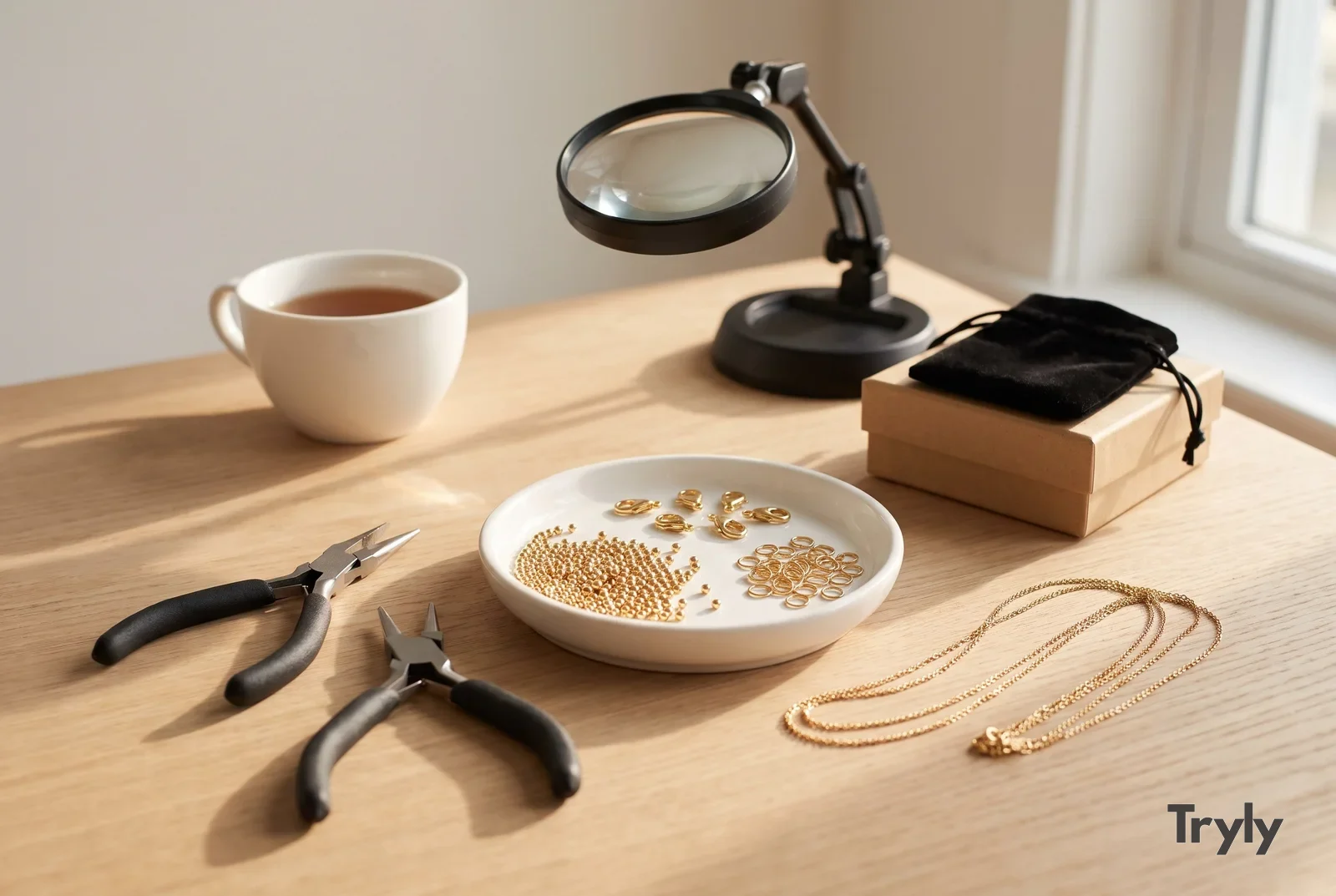
Key takeaways
- 1Pick one lane first: handmade, designed and produced by a partner, or curated. Fine or fashion then decides how you describe every piece.
- 2Price with the full formula: supplies plus overhead plus labor is break-even, wholesale is twice that or more, retail is twice wholesale or more. Then take off the fees.
- 3Jewelry is small, shiny and hard to size, so every listing needs a hero on white, a detail close-up, a worn shot and the measurements in the text.
10 free photos, no card. Photos as low as $0.25 each.
On this page+
How do you start a jewelry business from home?
The short answer
To start a jewelry business from home: pick your lane (handmade, designed or curated; fine or fashion), sort out registration and the rules for describing metal and stones, buy a small first order of supplies, price from supplies plus overhead plus labor, open on Etsy or your own store, brand and package, photograph every piece on white and worn, write listings with measurements, then market one channel and reorder what sells.
That is how to start a jewelry business without a studio or a stockroom. The order matters: your lane decides your rules and your marketplace, your marketplace decides your fees, and the fees belong in your price before you list the first pair of earrings.
Step 1: Which kind of jewelry business are you starting?
The short answer
You make the pieces, you design them and a partner produces them, or you curate and resell; then you choose fine or fashion. Each choice changes your startup cost, your marketplaces and how you describe the metal.
| Lane | What you sell | Money up front | Where it fits |
|---|---|---|---|
| Handmade | Pieces you make or assemble by hand from findings, chain, beads and stones | Lowest: tools, a first order of supplies, packaging | Etsy, your own store, markets |
| Designed, made by a partner | Your designs cast, plated or produced by a third party | Medium: samples, then a first run | Etsy (partner disclosed), your own store, wholesale |
| Curated or vintage | Pieces you select and resell | Medium: stock bought before it sells | Your own store; Etsy for vintage 20+ years old |
The last column follows Etsy’s rules. Its Creativity Standards count hand-assembled pieces as “made by a seller” (attaching charms to a necklace chain is Etsy’s own example) and allow your original design made by a production partner if you disclose the partner. Its help center says reselling mass-produced items is not allowed, and vintage means at least 20 years old. Curated new pieces belong on your own store; the online boutique guide covers that model.
Fine or fashion?
Shopify’s jewelry business guide puts fine jewelry at higher price points, made with precious metals and gems, and fashion or costume jewelry at lower price points, made of beads, wire, plated metal, plastic and synthetic gems. From home, fashion or gold-filled and sterling pieces are the easier start.
Step 2: What are the business basics: registration, licenses and metal rules?
The short answer
Clear your name, register if your structure needs it, and learn the rules for describing metal and stones: the FTC Jewelry Guides in the US, hallmarking in the UK. Elsewhere, check your local rules and ask a professional; this is a checklist, not legal advice.
United States
- Name. Search the USPTO’s trademark database before you print a single card.
- Registration. The SBA’s registration guide says trading as yourself under your legal name needs no registration; an LLC, corporation or partnership will probably need to register with the state, most states require you to register a DBA if you use one, and an EIN is free.
- Licenses and sales tax. The SBA says the licenses and permits you need depend on your business activities and location. Ask an accountant about sales tax before your first sale.
The FTC’s Jewelry Guides explain how to avoid deceptive claims about precious metal, gemstone and pearl products. Its consumer guidance defines the terms: gold filled, gold overlay and rolled gold plate mean a layer of at least 10 karat gold mechanically applied to a base metal; vermeil is sterling silver plated with gold; sterling means 92.5% pure silver.
United Kingdom
The Edinburgh Assay Office says it is a legal requirement to hallmark an article described as gold, silver, platinum or palladium above an exemption weight: 1 gram of gold, 7.78 grams of silver, 0.5 grams of platinum, 1 gram of palladium. A UK hallmark has three compulsory marks: sponsor’s, millesimal fineness and assay office. GOV.UK says dealers must display a notice explaining the hallmarks, and online shops must show that information prominently.
Step 3: What materials and suppliers does a small jewelry business need?
The short answer
Findings, chain, stones, wire, a few tools and packaging, bought in small amounts from suppliers who state the metal content in writing. Log what goes into each piece: it becomes your pricing sheet and your listing text.
Findings
Jump rings, clasps, ear wires and posts, bails and crimps. Match the metal: sterling findings on sterling chain.
Chain and wire
Sold by length. Buy a short length of each style and check how it hangs, kinks and tarnishes.
Stones, beads and pearls
Get the description the listing will need: natural, lab-created or imitation, and any treatment.
Base metal
Brass, stainless steel, plated, gold-filled or sterling. Get the metal content and plating in writing.
Tools
Round-nose and chain-nose pliers, flush cutters, a bead mat, a ring mandrel and sizer, polishing cloths.
Packaging
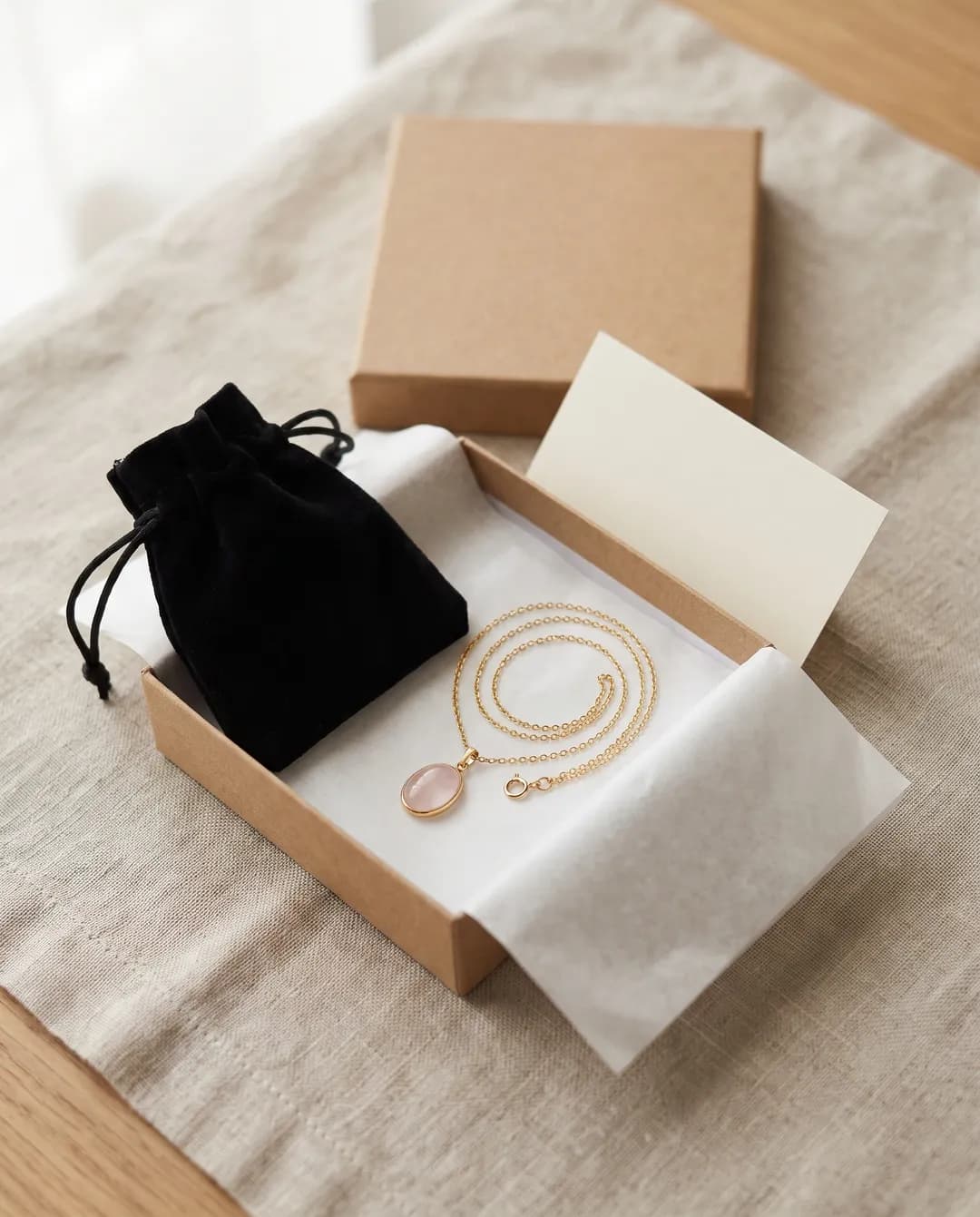
Boxes or pouches, backing cards, anti-tarnish strips, padded mailers and a printed care card.
Before a bigger order, ask whether the component will still be stocked in six months, and wear a finished piece for two weeks to test it.
Step 4: How do you price handmade jewelry?
The short answer
Use the formula in Etsy’s Seller Handbook: break-even price is supplies plus overhead plus labor, wholesale is break-even times two or more, and retail is wholesale times two or more. Then take off the fees and compare with similar pieces that sell.
Etsy’s wholesale pricing article gives the three lines. Its pricing basics guide fills them in: overhead is business costs not tied to one item, such as marketing or studio rent, divided by the number of items you plan to produce this year; labor is the time it takes to produce, package and ship, at an hourly rate you set for yourself.
Worked example (made-up numbers)
| Line | What it covers | Example |
|---|---|---|
| Supplies | Gold-filled hoops, ear posts, a card and a pouch | $6.00 |
| Overhead per item | Tools, listing fees, ads and packaging stock, spread over the year’s pieces | $2.00 |
| Labor | 20 minutes to make, pack and list at $20 an hour | $6.67 |
| Break-even | Supplies + overhead + labor | $14.67 |
| Wholesale | Break-even × 2 | $29.34, rounded to $29 |
| Retail | Wholesale × 2 | $58 ($29 × 2) |
Wholesale versus retail
Etsy says retailers expect to sell your work for double your wholesale price, if not higher (keystone pricing), and that once you sell wholesale, your own online prices should sit at the suggested retail price or higher so you don’t undercut the shop. A design that can’t carry both markups is a direct-to-customer piece.
Then take off the fees
Etsy’s fees policy charges $0.20 per listing, a 6.5% transaction fee on the item price plus shipping and gift wrapping, and a payment processing fee that varies with where your bank account is. Offsite Ads orders add 15%, or 12% once a shop has made $10,000 in sales over the prior 365 days. Its pricing guide notes that high shipping prices can stop buyers.
Step 5: Where should you sell jewelry online?
The short answer
Start with Etsy or your own store, then add markets for feedback, wholesale once a design sells, and Instagram to bring people in.
Etsy: how to sell handmade jewelry where buyers already search
Etsy’s listing image rules ask for original photos of the actual product, “not renderings or stock photos”, and say “you must use your own photos—either photos you took yourself or had someone take for you.” So every Etsy listing photo, the worn one included, is one you take: the piece on your own sweep, and the piece on you or a friend with the self-timer. Its image guidelines recommend photos at least 2000 pixels wide and high, with the first one landscape or square. Listings expire after four months and renew at $0.20.
Your own store
On your own store, built with a platform such as Shopify, the brand and customer list are yours, but nobody arrives unless you send them. Shopify’s pricing page lists a monthly plan fee, card rates and a short free trial; its help center says 2048 × 2048 pixels usually displays best for square product images, and the product image size guide covers other platforms.
Markets and fairs
A market shows which designs people pick up and what they will pay. Bring a mirror, a ring sizer and cards with your store address. Etsy’s fees policy says in-person sales through its Square reader pay Square’s processing fees, not Etsy’s 6.5% transaction fee.
Wholesale
Wholesale only works if your formula leaves room for the shop’s markup. Faire, a wholesale marketplace, says in its cost guide for North American brands that joining is free, marketplace orders carry a 15% commission plus a one-time $10 fee on a new retailer’s first order, orders from retailers you bring through Faire Direct carry 0% commission, and every order pays a payment processing fee.
Instagram is where worn shots earn their keep. Its shop setup guide says a shop needs an Instagram business account to show there, the review can take up to 4 weeks, and some Shops and checkout features are no longer supported. Instagram for clothing brands covers what to post. Selling clothing too? Where to sell clothes online compares the resale apps.
Step 6: How do you brand and package a home jewelry business?
The short answer
A name that is free to use, one look repeated on every photo and card, and packaging that survives shipping and carries the care card. Repetition is what makes a home business read as a brand.
- Name and mark. Short, easy to spell, cleared in the trademark search, with a logo that still reads on a small earring card. The clothing brand launch plan goes deeper on naming.
- One visual style. Two colors, one typeface, one photo style: the same background, light, model and crop on every listing.
- Packaging. A box or pouch that stops pieces scratching, an anti-tarnish strip, a card that keeps earrings paired, and a padded mailer. Mail one to yourself first.
- The care card. Water, perfume, storage, how to reach you, and a request for a review. Photograph the open box too; gift buyers want to see what arrives.
Step 7: How do you photograph jewelry that is small, shiny and hard to size?
The short answer
Shoot on white in soft window light, focus on the stone or clasp, and add a worn shot, because scale disappears on white. For a business, the harder part is the plan: a shot list for the whole launch, one look across every piece, and a budget before you shoot.
Shopify’s jewelry guide pairs clean product photos with lifestyle shots on a model to show scale. Plan a hero on white, an angle, a detail and a worn shot for every piece; the jewelry photography guide shows how to take each one, the white background guide covers the paper sweep, and the lighting guide covers window light and lamps.
Write a launch shot list and a budget
Before the first shoot, make a sheet with one row per piece and a column for each shot: hero, angle, detail, worn. Add a column for where each photo goes: Etsy, your store, a wholesale listing, a post. Shoot all the heroes in one session with the same sweep, light and camera height, then the angles, then the details; changing the setup piece by piece is how a shop ends up looking like ten different shoots.
The count tells you the budget. A 24-piece launch with four shots each is 96 photos. The heroes, angles and details cost your time at your own table. Split the worn column in two: Etsy’s worn shots are ones you take yourself, because its rules ask for photos you took or had taken, while the worn shots for your own store, your wholesale page, posts and ads are the ones that need a model. At Tryly’s lowest rate of $0.25 per photo, a portrait and a close-up for all 24 pieces is 48 photos, or $12, and the first 10 are free, no card.
Worn shots without booking a model
Off Etsy, the worn shot is the hard one for a home business: your store, wholesale page, posts and ads need a model, and the same model for every piece. With Tryly’s jewelry photo tool you upload the hero shot you already took and choose a pose for the piece, from a portrait to a close-up with the face out of shot. Choose one of 500+ models, your own model or yourself, and a background. You see the cost in credits before you confirm, and each photo uses one credit.
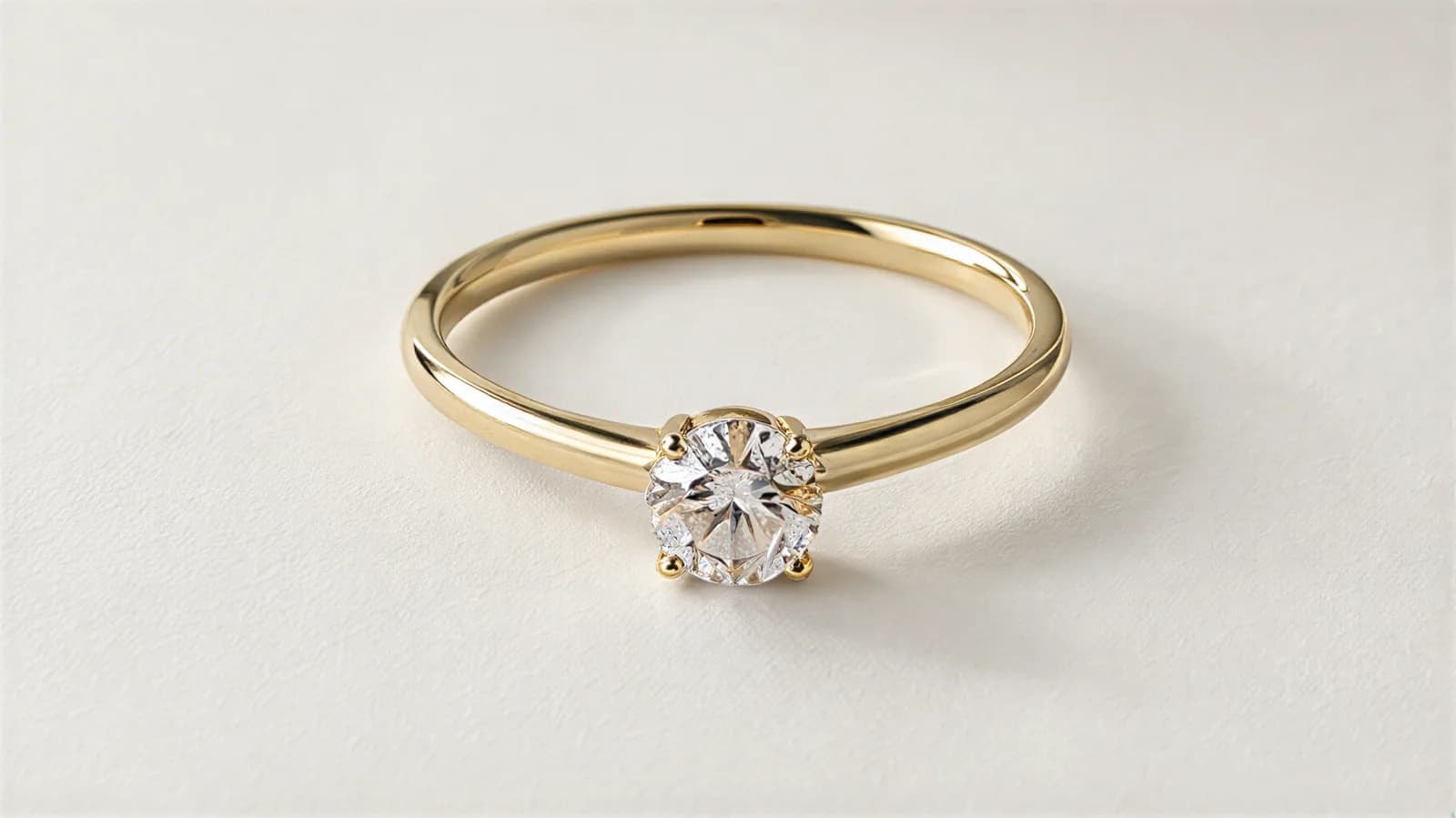
01 Your photo
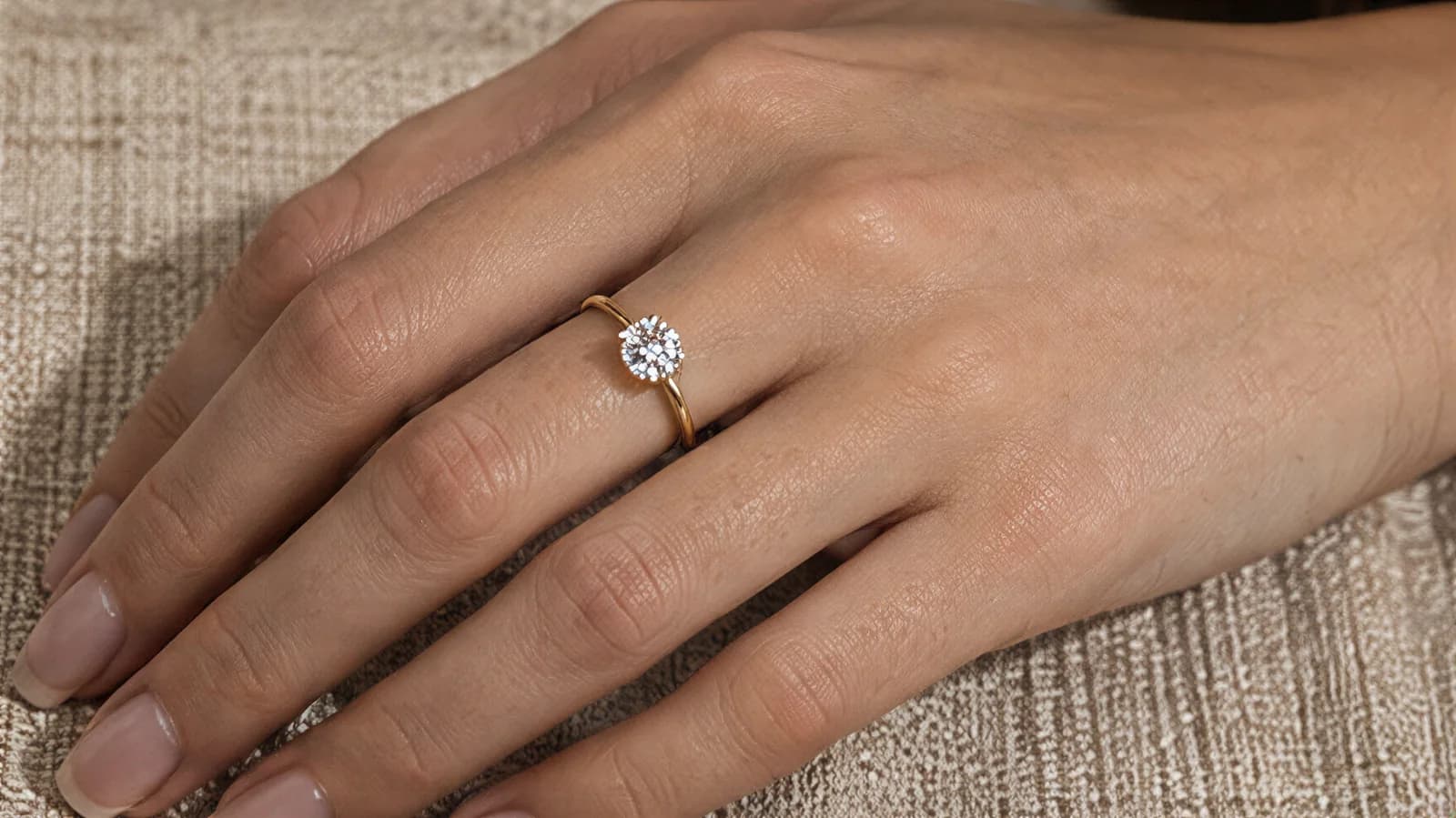
02 Hand on linen
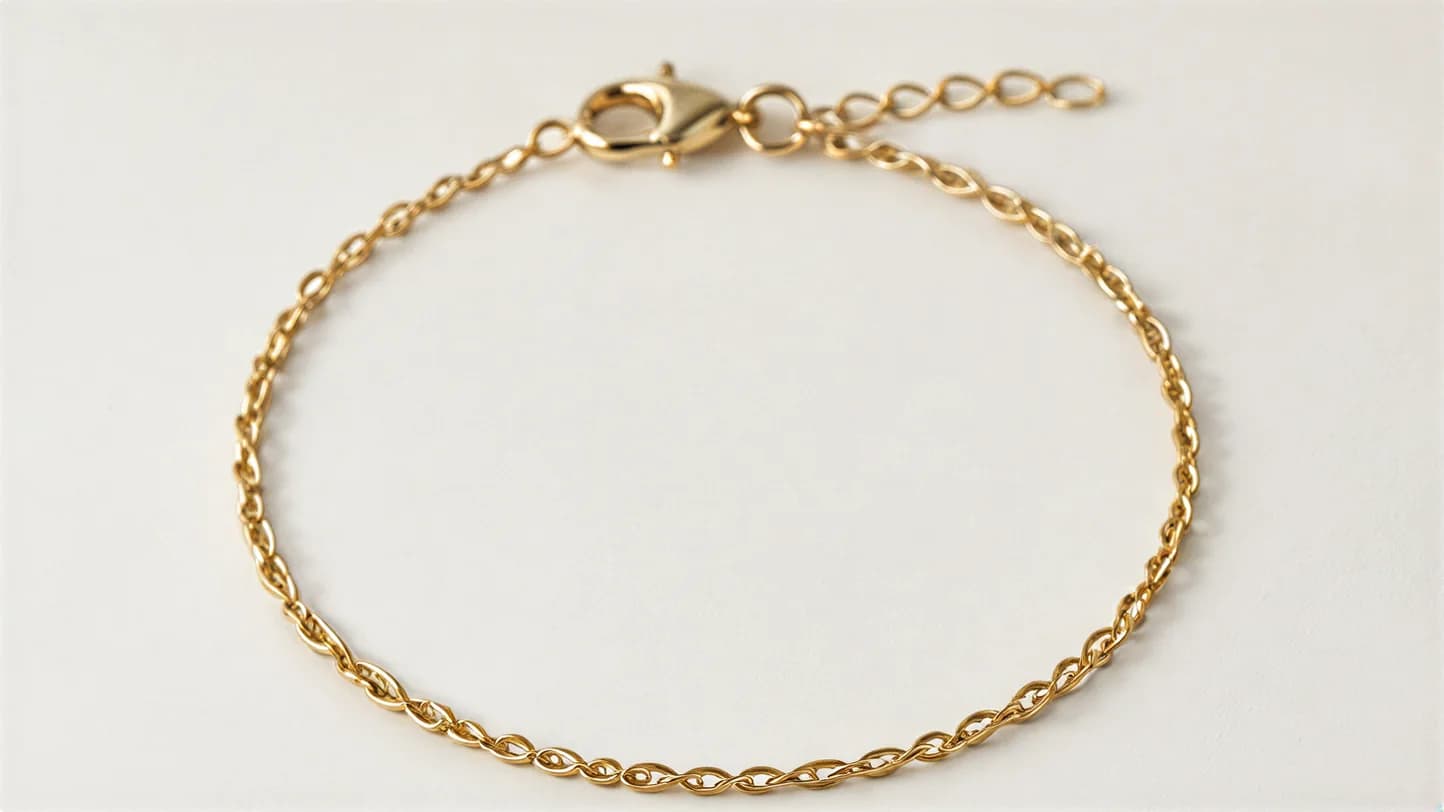
01 Your photo
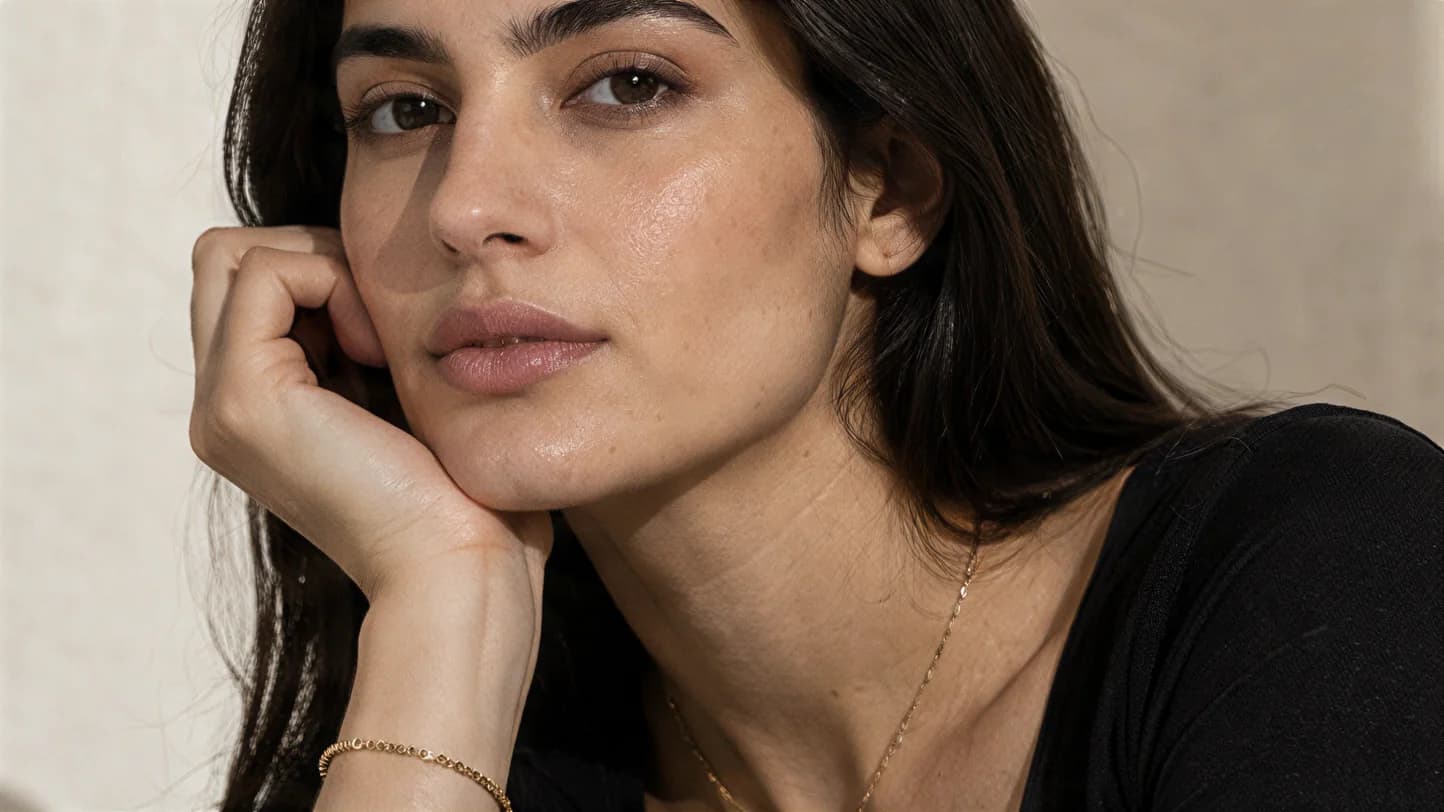
02 Hand to face
Photos made on a paid plan can be used on your store, in ads and on social media, so the same portrait is your post and your ad.
Photos for wholesale
Faire’s product photography guidelines ask for a feature image on a white or light background, cropped square, with 1050 × 1050 pixels as the ideal size, and say to save lifestyle shots for the other photos on the product page. They add that similar backgrounds make a product line look cohesive. Your hero on white is that feature image, and the worn shots go behind it. If you send shops a line sheet, use the same square hero next to each piece’s wholesale and suggested retail price, so the photos a shop sees match the ones its customers will see on your store.
Step 8: What goes in a jewelry listing?
The short answer
Everything a photo can’t show: measurements, the exact metal and plating, what the stone is, care, sizing, what arrives and how long it takes.
- Measurements: chain length, pendant size, hoop diameter, band width, bracelet length, ring size and whether it can be resized.
- Materials, copied from your supplier’s written description: base metal, plating or fill, and whether a stone is natural, lab-created or imitation.
- Care: water, perfume and sleep, and how to store the piece to slow tarnish.
- Sizing help: how to measure a ring size or a chain length at home.
- What arrives: the box or pouch, the card, and whether earrings are sold as a pair.
- Lead time and personalization options for made-to-order pieces.
Step 9: How do you market a new jewelry business?
The short answer
Post to one channel every week, collect emails from the first order, ask for reviews with photos, plan for gift seasons, and write listings for search. Then reorder what sells.
- One channel, every week. Worn shots and close-ups, not flat lays alone.
- An email list from day one. A signup on your store and a card in the box: the only audience you own.
- Reviews with photos. A customer’s photo of the piece worn sells to the next buyer; ask their permission before you reuse it in a listing.
- Gift seasons. Jewelry is often bought as a gift, so have stock, photos and shipping cut-off dates ready weeks ahead.
- Listings written for search. Material, style, occasion and recipient in the title: “sterling silver huggie hoops, everyday, gift for her”.
What are the most common mistakes when starting a jewelry business?
The short answer
Pricing from materials alone, calling plated metal gold, skipping UK hallmarking, no measurements, every piece shot differently, and buying in bulk before anything sells.
- Pricing from materials alone. Add overhead and pay yourself, or the first wholesale order loses money.
- Calling plated jewelry “gold”. Describe the plating, fill or alloy the way the rules where you sell require.
- Selling unhallmarked precious metal in the UK. Check the exemption weights before you describe a piece as gold or silver.
- No measurements. A worn photo shows placement, not size. Put the numbers in the text.
- Every piece shot differently. Pick one background, one model and one crop for the launch, and use them for every listing.
- Bulk supplies before anything sells. Buy a short length or a small pack, test it, then reorder.
Questions about starting a jewelry business
How much does it cost to start a jewelry business from home?+
It can start small: a small order of findings, chain and stones, a few tools and packaging, then make pieces as they sell. The repeating costs are platform fees, packaging and photos. Etsy charges $0.20 per listing and a 6.5% transaction fee, and worn photos on Tryly cost as low as $0.25 each at its lowest rate, with 10 free photos, no card.
Do I need a license to sell handmade jewelry?+
It depends on where you are and what you do. The U.S. Small Business Administration says the licenses and permits you need depend on your business activities and location. Check with your local authority or an accountant; this guide is not legal advice.
How do you price handmade jewelry?+
Break-even is supplies plus overhead plus labor, wholesale is break-even times two or more, and retail is wholesale times two or more, as Etsy’s Seller Handbook sets out. Then subtract platform fees.
Can I sell jewelry on Etsy if I do not make it myself?+
Only within Etsy’s Creativity Standards: items must be made, designed, handpicked or sourced by you, reselling mass-produced items is not allowed, and vintage means at least 20 years old. Your own design made by a production partner is allowed if you disclose the partner.
Can I call gold-plated jewelry gold?+
Describe it by what it is. In the US, the FTC’s Jewelry Guides and consumer guidance define terms such as gold filled, vermeil and sterling. In the UK, a piece described as gold must be hallmarked above the exemption weight. Elsewhere, check your local rules.
How do I get worn photos of my jewelry without hiring a model?+
For Etsy listings, wear it yourself with a tripod and the self-timer or ask a friend, because Etsy asks for photos you took or had someone take. For your own store, wholesale pages, social media and ads, photograph the piece on white, upload it to Tryly’s jewelry tool, say what it is, and pick a pose and a model: one of 500+, your own model or yourself. One photo is one credit, and the first 10 photos are free, no card.
Sources: Etsy fees policy, Creativity Standards, what can I sell, image guidelines, listing image rules, wholesale pricing and pricing basics; Shopify jewelry business guide, pricing and product media types; FTC Jewelry Guides, revisions press release and consumer guidance; GOV.UK hallmarking guidance; Edinburgh Assay Office; London Assay Office; SBA register your business and licenses and permits; USPTO trademark search; Faire cost guide and product photography guidelines; Instagram Help set up a shop.
Written by
Elena Varga
Head of Content, Tryly Academy
Former e-commerce photo producer who ran catalogue shoots for fashion labels for over a decade. Writes the Academy’s guides.
- 11 years in fashion e-commerce
- 1,200+ catalogue shoots produced
Expert review
Sofia Moretti
Fashion photographer · Expert reviewer
Has shot campaigns and on-model e-commerce for fashion brands for 14 years. Reviews every Academy article for accuracy.
- 14 years in fashion photography
- Campaign and catalogue work across Europe
How we work: every Academy article is written by a specialist, reviewed by a working fashion photographer, and re-checked against its sources when prices or rules change.